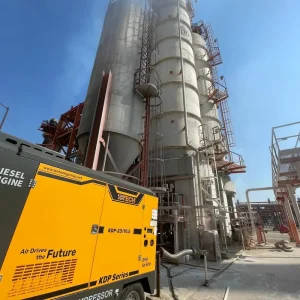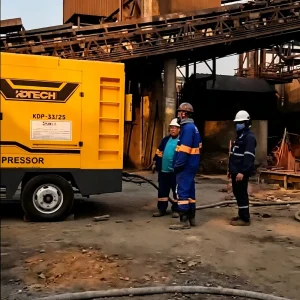


In oil and gas refineries, industrial air compressors are not just utility equipment; they are the lifeblood of operations, directly impacting safety, process control, and profitability. This article unpacks the essential applications, critical challenges, and strategic solutions for optimizing compressed air systems in these demanding environments, offering actionable insights for reliability and efficiency.
Refinery Air Compression: Powering Safety & Efficiency
Key Takeaways
- Instrument air quality is paramount for safety and process integrity in refineries.
- Energy costs associated with compressed air are substantial; VSD compressors and heat recovery offer significant savings.
- Unplanned downtime due to compressor failure is extremely costly; predictive maintenance and redundancy are essential.
- Strict compliance with air purity (ISO 8573-1) and hazardous area (ATEX) standards is mandatory.
- Choosing between rotary screw, centrifugal, and reciprocating compressors depends on specific application requirements (volume, pressure, air quality).
Related: Refinery compressed air solutions · petrochemical plant air systems · gas processing facility pneumatic power · upstream and downstream air compression · critical process air for O&G · industrial air management in hazardous environments.
Key Insights:
- Reliable instrument air is non-negotiable for refinery safety and precise process control.
- Energy consumption from compressed air systems can be significantly reduced through VSD technology and heat recovery.
- Predictive maintenance, leveraging IIoT, is crucial to minimize unplanned downtime and extend equipment life in harsh O&G conditions.
- Compliance with ISO 8573-1 and ATEX standards is paramount for air purity and hazardous area operations.
- Strategic sizing and N+1 or N+2 redundancy are vital for critical applications to ensure continuous operation.
Industrial air compressors are far more than simple tools in oil and gas refineries; they are foundational to every facet of operation, from safety protocols to intricate process control. A reliable compressed air system underpins the entire plant, influencing everything from valve actuation to critical safety shutdowns. Neglecting this vital infrastructure means risking operational integrity, safety, and ultimately, profitability.
The Critical Role of Compressed Air in Refinery Operations
Refineries are complex ecosystems where precision and reliability are paramount. Compressed air serves several distinct, critical functions. First, there’s instrument air, which powers pneumatic controls, valves, and actuators. This air must be impeccably clean and dry to prevent instrument malfunction, which could lead to severe safety incidents or costly process deviations. Think about it: a faulty valve due to contaminated air could trigger a cascade of issues.
Next, we have process air. This is often directly injected into processes, such as oxidation, sulfur recovery units, or catalyst regeneration. The quality requirements here are often even more stringent than for instrument air, demanding oil-free compression to prevent contamination of the end product or process. Finally, utility air handles general plant tasks, powering pneumatic tools, cleaning equipment, and supporting maintenance activities. While less critical than instrument or process air, its consistent availability still impacts overall plant efficiency. Each application demands a specific air quality and pressure, making a one-size-fits-all approach impractical and risky.
Navigating the Harsh Realities: Key Challenges & Industry Trends
Operating industrial air compressors in an oil and gas refinery presents a unique set of challenges. The environment itself is corrosive, dusty, and often hazardous, requiring equipment built to withstand extreme conditions.
Energy Efficiency Imperatives
Energy consumption is a massive concern. Compressed air systems are notorious energy hogs. According to the U.S. Department of Energy (DOE) and the Compressed Air and Gas Institute (CAGI), compressed air systems can account for 10-30% of a typical industrial plant’s total electricity bill. This figure is often higher in energy-intensive sectors like oil and gas. Optimizing efficiency isn’t just about cost savings; it’s about reducing carbon footprint and meeting increasingly stringent environmental targets. Variable Speed Drive (VSD) compressors have become a game-changer here, adjusting motor speed to match demand, which can lead to significant energy reductions, sometimes up to 35% compared to fixed-speed units in fluctuating demand scenarios.
Uncompromising Safety & Reliability
Safety is paramount. Any failure in the compressed air system, especially instrument air, can lead to emergency shutdowns, potential hazards, or even explosions. This isn’t theoretical; a single unplanned shutdown in a large refinery can cost millions of dollars per day in lost production, according to IHS Markit (2022) data on industrial downtime. Therefore, reliability isn’t a luxury; it’s a fundamental requirement. Redundancy (N+1 or N+2 configurations) is standard practice for critical applications, ensuring that if one compressor fails, another automatically kicks in without interruption. Furthermore, equipment must comply with ATEX directives for operations in potentially explosive atmospheres, a non-negotiable aspect for any refinery installation.
Evolving Environmental & Regulatory Landscape
The regulatory environment is constantly tightening. Refineries face pressure to reduce emissions and ensure air quality, both within the plant and in exhaust streams. This pushes the demand for oil-free compressors to prevent oil carryover into processes or the atmosphere. Compliance with air purity standards like ISO 8573-1 is critical, defining allowable levels of particles, water, and oil. Frankly, ignoring IIoT in today’s environment is just asking for trouble down the line. I’ve personally seen how a well-implemented predictive maintenance program can cut unplanned downtime by 20% or more. This isn’t merely about avoiding fines; it’s about responsible operation and maintaining public trust.
Essential Compressor Technologies for Oil & Gas Refineries
Selecting the right compressor technology is crucial for each specific application within a refinery. It’s not a one-size-fits-all decision.
Rotary Screw Compressors
These are the workhorses for utility air and some process air applications. Available in both oil-lubricated and oil-free variants, they offer continuous duty, relatively high efficiency, and a compact footprint. Their reliability and ease of maintenance make them a popular choice for general plant air and less critical process needs.
Centrifugal Compressors
When high volumes of oil-free air are required, especially for critical process air or large instrument air demands, centrifugal compressors are often the preferred solution. They are inherently oil-free, provide consistent flow, and are extremely durable. Their initial capital cost is higher, but their long-term operational efficiency and reliability, particularly in large-scale applications, often justify the investment.
Reciprocating Compressors
While less common for general plant air in modern refineries, reciprocating compressors still have their niche. They excel at producing very high pressures, making them suitable for specialized applications like nitrogen generation or specific gas boosting duties. Their intermittent duty cycle and higher maintenance requirements mean they are typically not chosen for continuous, high-volume needs.
Specialty Compressors (e.g., Oil-Free)
For instrument air and other critical processes where any oil contamination is unacceptable, dedicated oil-free compressors are essential. This category includes oil-free rotary screws and centrifugal units. Achieving ISO 8573-1 Class 0 air (zero oil contamination) is a frequent requirement, ensuring the integrity of sensitive instruments and preventing product contamination.
Optimizing Compressor Systems: Strategies for Peak Performance
Beyond selecting the right hardware, strategic implementation and ongoing management are vital for maximizing performance and minimizing operational risk.
Predictive Maintenance & IIoT Integration
The shift from reactive to predictive maintenance is perhaps the most significant trend in industrial asset management. Integrating Industrial Internet of Things (IIoT) sensors into compressor systems allows for real-time monitoring of vibration, temperature, pressure, and energy consumption. This data, analyzed by AI algorithms, can predict potential failures before they occur, enabling scheduled maintenance during planned outages rather than costly emergency repairs. According to a report by Deloitte (2023), predictive maintenance can reduce maintenance costs by 5-10% and extend asset life by 20-40%. For critical refinery operations, this translates directly to enhanced safety and uptime.
Sizing & Redundancy Considerations
Proper sizing is crucial. An undersized system will struggle to meet demand, leading to pressure drops and potential process disruptions. An oversized system, conversely, wastes energy. Our experience suggests that a thorough air audit, mapping demand profiles across the plant, is the first step. For critical systems, N+1 or N+2 redundancy ensures continuous air supply even during maintenance or unexpected failures. While redundancy is crucial for critical systems, over-sizing non-critical utility air can be a costly mistake, leading to poor efficiency and higher operational costs.
Air Treatment & Quality Standards
The quality of compressed air delivered to the point of use is just as important as its availability. This involves a multi-stage approach:
- Filters: Removing particulate matter and aerosols.
- Dryers: Desiccant or refrigerated dryers to remove moisture, preventing condensation and corrosion in pipes and instruments. For instrument air, a pressure dew point of -40°F (-40°C) is often required.
- Oil-Water Separators: For oil-lubricated compressors, these manage condensate safely.
Adherence to ISO 8573-1 standards for air purity (particles, water, oil) is not just a best practice; it’s a regulatory and operational necessity, particularly for process and instrument air.
The Bottom Line: Strategic Investment for Operational Excellence
Investing in robust, efficient, and well-maintained industrial air compressor systems for oil and gas refineries is not an expense; it’s a strategic investment in operational excellence. It directly impacts safety, process reliability, energy efficiency, and environmental compliance. Companies that prioritize advanced air compression technologies and smart maintenance strategies will be better positioned to navigate the complexities of the modern energy landscape, ensuring both profitability and responsible operations.
Expert Insights
"From my vantage point, the biggest mistake refineries make is viewing their compressed air system as a secondary utility rather than a primary operational asset. The reality is, a robust, well-maintained air system is foundational to safety, productivity, and profitability. Cutting corners here is a false economy, one I've seen lead to far greater costs down the line."
Further Reading
- Skid-Mounted Air Compressor Applications for Oilfield Temporary Works
- Professional Mining Air Compressor Tech Sharing for Operators
- Mining Air Compressor Tech Sharing | Performance Optimization Guide
- Intelligent Mining Air Compressor Industry Future Development Trend
- Industrial air compressor, oil & gas refineries, instrument air, process air, utility air, compressed air systems, energy efficiency, predictive maintenance, ATEX compliance, ISO 8573-1, centrifugal compressors, rotary screw compressors. – Mining Air Compres
- Regional Mining Air Compressor Industry Development Differences
- Global Mining Air Compressor Industry Scale & Future Forecast
- Portable Diesel Air Compressor Applications for Underground Mine Auxiliary Work
About the Author

Related Reading: Using Air Compressors for Oil & Gas Well Testing & Purge Operations
Related Applied Cases