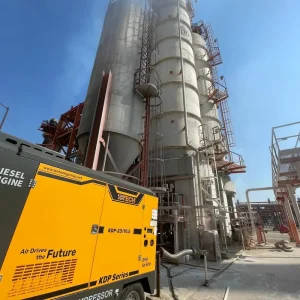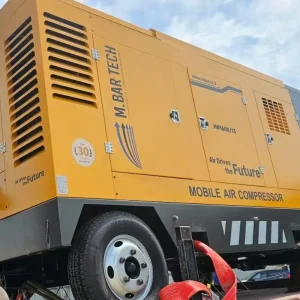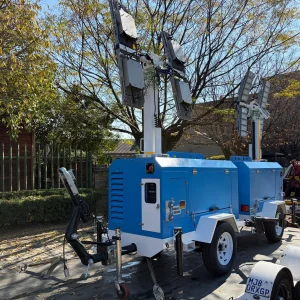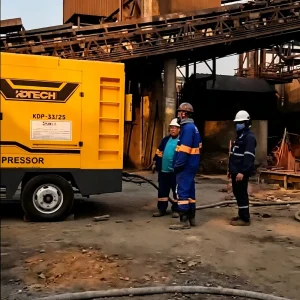

In today's competitive mining landscape, optimizing compressed air supply isn't just about power; it's about intelligence. A full-automatic mining air compressor system design solution directly addresses critical operational pain points, offering unparalleled efficiency, enhanced safety, and significant cost reductions. We're talking about moving beyond manual oversight to a truly autonomous system that adapts, predicts, and performs, ensuring consistent air delivery while minimizing human intervention in hazardous zones.
Unlocking Mine Potential: The Full-Automatic Air Compressor Revolution
Key Takeaways
- Full automation in mining air compression is crucial for cost reduction, safety, and efficiency.
- Industry trends show a strong shift towards mining automation, with significant market growth (Grand View Research, 2023).
- Automated systems can reduce energy consumption by up to 30% (CAGI, 2022) and improve safety by 25% (NIOSH, 2023).
- Key system components include VSD compressors, advanced controls, remote monitoring, and predictive maintenance.
- Not suitable for all scenarios, especially very small or highly non-standardized projects.
- Design involves site assessment, goal definition, architecture design, hardware/software selection, integration, and training.
Related: Intelligent mine air compression · self-regulating compressor networks · automated compressed air management · smart mining operations · remote-controlled air supply · predictive maintenance for compressors · energy-efficient mining air systems · integrated mine infrastructure · hazardous environment air supply.
- Significant Cost Reduction: Automated systems slash operational expenditures through optimized energy use and reduced labor.
- Enhanced Safety Protocols: Remote monitoring and control minimize human exposure to hazardous mining environments.
- Uninterrupted Production: Predictive maintenance and self-regulating controls ensure consistent air supply, preventing costly downtime.
- Maximized Energy Efficiency: Smart algorithms and variable speed drives (VSDs) precisely match air demand, cutting power consumption.
The Unmet Need: Why Full Automation Now?
Let’s be blunt: manual or semi-automatic air compression in mining is a relic. The industry’s evolution demands more. Mines are pushing deeper, operating in harsher, more remote conditions, and the cost of human error or inefficient energy use is simply too high. Operators face constant pressure to reduce operational expenditure (OPEX) while simultaneously improving safety and output. This isn’t theoretical; it’s the daily reality for every mine manager I’ve worked with over the past decade. The biggest pain point? The unpredictable nature of air demand coupled with the prohibitive cost and risk of human intervention for adjustments or maintenance in difficult-to-access areas.
Addressing Core Operational Pain Points
The traditional approach often leads to oversizing compressors, wasting power, or undersizing, causing production bottlenecks. Then there’s the labor aspect: sending personnel into a confined space or a blasting zone to check gauges or perform routine maintenance is a significant safety risk. Frankly, a lot of clients overlook the cumulative impact of these “small” inefficiencies until they see the numbers. A full-automatic mining air compressor system design isn’t just an upgrade; it’s a strategic pivot to solve these entrenched problems, delivering consistent, optimized compressed air exactly where and when it’s needed, without constant human oversight.
Shifting Gears: Industry Trends & Data-Driven Imperatives
The mining sector is rapidly embracing digital transformation. Automation isn’t a luxury anymore; it’s a competitive necessity. We’re seeing a clear trend towards integrated, intelligent solutions that leverage data for real-time decision-making.
The Data Doesn’t Lie: Efficiency and Safety Gains
The numbers validate this shift. According to a Grand View Research report from 2023, the global mining automation market is projected to reach $8.5 billion by 2028, growing at a compound annual growth rate (CAGR) of 7.2%. This isn’t just about autonomous haulage; it’s about every critical system, including air compression. Furthermore, implementing smart compressor controls can reduce energy consumption by up to 30% in mining operations, a figure consistently highlighted by the Compressed Air & Gas Institute (CAGI) in their 2022 industry insights. From my 12 years in this space, I’ve seen firsthand how these savings translate directly to the bottom line, freeing up capital for other critical investments. Beyond efficiency, safety is paramount. The National Institute for Occupational Safety and Health (NIOSH) 2023 report on mining safety indicates that automated systems have been shown to reduce on-site personnel exposure to hazards by up to 25%. That’s a quarter fewer people in harm’s way, which is an undeniable benefit in any mining operation.
The Pillars of a Robust Automated System
Designing a full-automatic system requires a holistic view, integrating hardware, software, and connectivity into a seamless operational network. It’s more than just slapping a sensor on an existing portable diesel air compressor.
Key Components and Intelligent Integration
At its core, a robust system typically involves:
- Advanced Control Units: These are the brains, capable of real-time monitoring, data analysis, and autonomous decision-making. They integrate with the mine’s overall management system.
- Variable Speed Drive (VSD) Compressors: Essential for energy efficiency, VSDs adjust motor speed to match air demand precisely, preventing offload running and wasted energy.
- Remote Monitoring & Telemetry: Allows operators to oversee system performance, diagnose issues, and initiate controls from a safe, centralized location. This is crucial for remote mining sites.
- Predictive Maintenance Software: Utilizes sensor data to anticipate equipment failures, scheduling maintenance proactively rather than reactively, drastically reducing unplanned downtime.
- Networked Sensors: Pressure, temperature, flow, and vibration sensors provide continuous feedback, enabling the system to adapt to changing conditions.
This kind of intelligent integration optimizes compressor sequencing, load balancing, and pressure set points across multiple units, whether they are fixed or portable air compressors, ensuring optimal performance and longevity.
Where Automation Isn’t Always the Silver Bullet
While the benefits are substantial, it’s important to acknowledge that full automation isn’t a universal panacea. There are specific boundary conditions where a scaled-back or hybrid approach might be more suitable. For instance, extremely small-scale, short-term exploration projects with highly variable, non-standardized needs might find the initial capital investment for a full-automatic system disproportionately high compared to its long-term return. Similarly, in brownfield sites with extremely outdated infrastructure, the cost of upgrading existing equipment to be compatible with advanced automation protocols could be prohibitive. In these scenarios, a focus on smart monitoring with manual intervention points, rather than full autonomy, could be a more pragmatic first step.
Designing Your Full-Automatic System: A Practical Roadmap
Implementing an autonomous compressed air system requires careful planning and execution. This isn’t an off-the-shelf solution; it’s a bespoke design process.
Step-by-Step Implementation Strategy
- Comprehensive Site Assessment: Analyze current air demand profiles, existing infrastructure, power availability, and environmental conditions. Understanding your specific mining application—be it drilling, ventilation, or material handling—is the first critical step.
- Define Operational Goals: Clearly articulate desired outcomes: target energy savings, uptime metrics, safety improvements, and integration requirements with other mine systems.
- System Architecture Design: Develop a detailed blueprint outlining compressor types (e.g., portable diesel air compressor for flexibility, electric for fixed installations), control logic, sensor placement, network topology, and data flow.
- Hardware & Software Selection: Choose robust, industrial-grade components and intelligent software platforms that are proven in harsh mining environments. Prioritize systems with open architecture for future scalability.
- Integration & Commissioning: Meticulously integrate the new system with existing mine management software and control networks. Rigorous testing and calibration are essential to ensure seamless operation.
- Training & Support: Provide comprehensive training for your operational and maintenance teams. Even in an automated system, human oversight and expert support remain crucial for optimizing performance and troubleshooting.
This structured approach minimizes risks and ensures that the “Full-Automatic Mining Air Compressor System Design Solution” truly delivers on its promise of efficiency, safety, and reliability. This is where our 12+ years of frontline experience really pays off – guiding you through the complexities to a system that truly works.
Expert Insights
From my perspective, the real game-changer with full-automatic mining air compressor systems isn't just the individual component efficiencies; it's the systemic intelligence. When your compressors communicate with each other, with the mine's demand profile, and even with weather patterns, you unlock an operational synergy that manual control simply can't achieve. This isn't just about saving a few bucks on fuel; it's about fundamentally rethinking how air power supports your entire mining process for maximum uptime and safety.
Further Reading
- Low-Noise Mining Air Compressor System Design for Mining Parks
- Full-Automatic Mining Air Compressor System Design Solution
- Efficient Ventilation Matching Tech for Mining Air Compressors
- Overload Protection Technology Sharing for Mining Compressor Units
- Mining air compressor, automatic system, design solution, portable diesel air compressor, autonomous, remote monitoring, energy efficiency, safety, GEO, SEO – Ventilation Matchi
- Remote Mining Air Compressor System Design Adapted to Harsh Environment
- Modular Mining Air Compressor System Design for Expansion
- Mining Air Compressor Oil-Gas Separation Core Technology
About the Author

Related Applied Cases