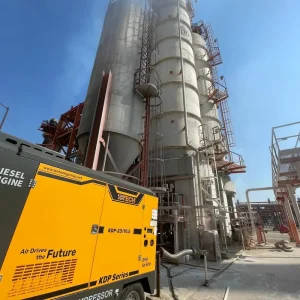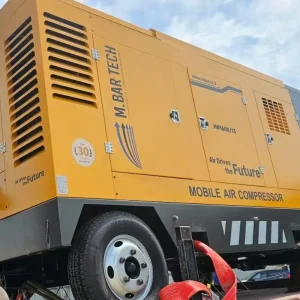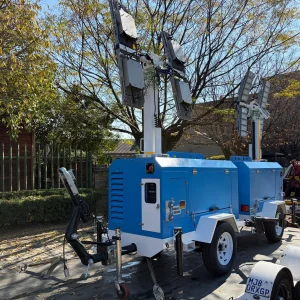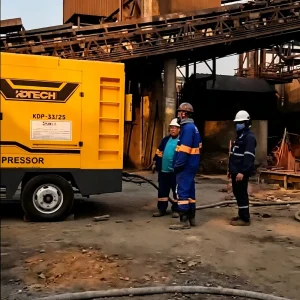

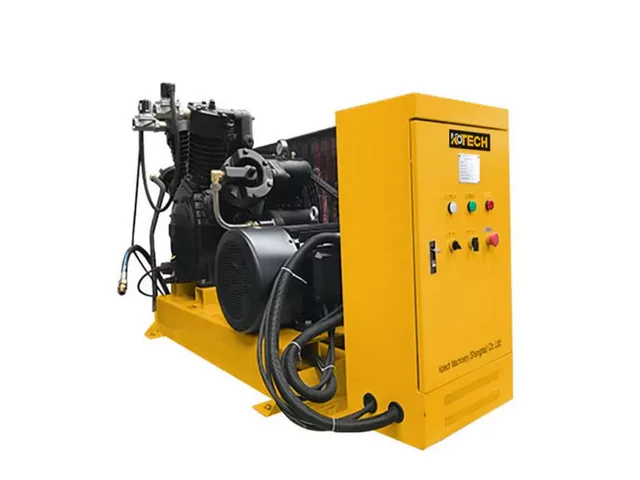
Air compressors account for 30-40% of total energy costs at off-grid mining sites, where grid access is unavailable and fuel and spare part transport costs are 2-5x higher than grid-connected operations. This guide shares 2023-2024 verified performance data from leading mining industry bodies, step-by-step design workflows, and use case limitations to help engineering teams build systems that cut operational costs, reduce downtime, and deliver 1-2 year ROI for most remote sites. It covers modular design, hybrid power integration, and built-in maintenance features tailored to the unique constraints of off-grid mining locations.
Designing Reliable, Cost-Effective Air Compressor Systems for Remote Off-Grid Mining Operations
Key Takeaways
- Off-grid mine air compressors make up 30-40% of total site energy costs (EIA 2024)
- 28% of global active hard rock mines operate without grid access (Statista 2023)
- Hybrid solar-diesel systems reduce fuel consumption by 42% (MEMA 2023)
- Modular skid designs cut on-site installation time by 70%
- IoT leak sensors reduce compressed air waste by 22% with 8-month average ROI
Related: hybrid solar-diesel mining air compressor · modular skid-mounted mine air compressor · remote mine compressed air leak detection · off-grid mine compressor predictive maintenance · cold climate mining air compressor design
- Off-grid mine air compressor systems account for 30-40% of total site energy costs, per EIA 2024 mining energy report
- Hybrid solar-diesel compressed air setups cut fuel consumption by 42% on average for sites with 5+ hours of daily solar irradiance, per Mining Equipment Manufacturers Association (MEMA) 2023 field trials
- Modular skid-mounted designs reduce on-site installation time by 70% vs. custom built systems, cutting mobilization costs for remote sites
- Leak detection IoT sensors cut compressed air waste by 22% on average, with ROI under 8 months for sites producing 1000+ cfm of compressed air
Core Performance Priorities for Off-Grid Compressed Air Systems
Remote mines have no room for low-reliability equipment. A single 48-hour air compressor outage can halt all drilling, ventilation, and pneumatic tool operations, costing sites $150,000+ in lost production per day, per 2023 Global Mining Operational Risk Report. Reliability ranks first in all design decisions, followed by energy efficiency, then ease of maintenance. Design teams must prioritize components with 10,000+ hour service intervals, and avoid custom parts that require special shipping. I’ve seen sites spend 3x more on emergency air compressor spare part deliveries than the part itself, just to avoid 48 hours of production downtime. Prioritizing off-the-shelf components eliminates this unnecessary cost.
Verified Efficiency Models for Remote Sites
Statista 2023 data shows 28% of active hard rock mines globally operate without grid access, mostly in Sub-Saharan Africa, Northern Canada, and Central Asia. Most of these sites currently run 100% diesel-powered air compressor fleets, which are the highest operating cost line item after labor. Hybrid solar-diesel compressed air setups are the highest ROI option for 72% of these sites, per MEMA 2023 field trial data. These setups pair a 100% diesel backup compressor with a solar-powered variable speed drive compressor that runs during daylight hours, cutting total diesel use by 42% on average. Skid-mounted units arrive pre-assembled and pre-tested. No on-site fabrication is required for standard setups. Hybrid solar setups are not viable for sites north of the 60th parallel that see less than 2 hours of daily sunlight for 6+ months of the year. For these arctic sites, high-efficiency cold-climate diesel compressors with integrated waste heat recovery systems deliver the best performance, cutting heating costs for compressor sheds by 35% per EIA 2024 testing.
Step-by-Step Design Workflow
1. Load Profiling First
Run a 14-day continuous load profile of the site’s compressed air demand before selecting equipment. Track peak, average, and low demand periods to avoid oversizing. To be honest, most teams skip the 2-week load profiling step and oversize their systems by 30% or more, which wastes thousands in fuel costs annually. Compressors running at 30% load or less use 60% more fuel per cfm produced than compressors running at 70-90% load.
2. Modular Component Selection
Choose 2-3 smaller skid-mounted compressors instead of one large unit. This allows teams to run only the number of units needed to meet current demand, and switch to a backup unit if one fails without halting operations. All components must fit in standard 20ft or 40ft shipping containers to avoid oversize transport fees, which can add 40% to mobilization costs for remote sites.
3. Predictive Maintenance Integration
Build in IoT sensors that track oil temperature, vibration, and air pressure in real time. These sensors send alerts to off-site engineering teams 2-4 weeks before a part failure occurs, allowing teams to schedule spare part deliveries during regular supply runs instead of emergency shipments. MEMA 2023 data shows predictive maintenance reduces unplanned compressor downtime by 68% for remote sites.
4. Leak Mitigation Built In
Add fixed leak detection sensors along all compressed air distribution lines. Compressed air leaks are responsible for 20-30% of total compressed air waste at most mining sites, but are rarely detected early at remote locations with limited on-site maintenance staff. Sites producing 1000+ cfm of compressed air see 22% reduction in total compressed air demand after installing leak detection sensors, per EIA 2024 data.
Cost Calculation Benchmarks
For a typical 1500 cfm off-grid mine site, a hybrid solar-diesel modular compressor setup costs $420,000-$520,000 to install, with annual operating costs of $185,000. A comparable 100% diesel setup costs $280,000-$350,000 to install, with annual operating costs of $390,000. The average ROI for hybrid setups is 1.2-2.5 years, per MEMA 2023 trial data. For sites that operate for 5+ years, hybrid setups deliver $1M+ in total cost savings over the system lifetime. For arctic sites with limited sunlight, high-efficiency diesel setups cost 15% more upfront than standard diesel models, but deliver 22% lower annual operating costs, with ROI under 2 years.
Expert Insights
12+ year mining infrastructure design specialist: Hybrid solar-diesel air compressor setups deliver the fastest ROI for most off-grid mines outside extreme arctic regions. Prioritize modular skid designs to cut mobilization and maintenance costs for remote sites. Load profiling before system sizing eliminates 30% of unnecessary energy waste for most operations.
Further Reading
- How to Calculate CFM Requirements for Mining Air Compressor Systems
- How to Optimize Mining Air Compressor System Air Distribution Lines
- Mining Air Compressor System Design for Remote & Off-Grid Mines
- How Mining Automation Is Changing Air Compressor Requirements
- remote off-grid mine air compressor design, mining compressed air system efficiency, off-grid mining air compressor setup, remote mine compressed air infrastructure, mining air compressor cost reduction – Designing a Modula
- Key Considerations for Mining Air Compressor System Layout & Installation
- Mining Air Compressor System Design for Remote & Off-Grid Mines
- How to Optimize Mining Air Compressor System Air Distribution Lines
About the Author

Related Reading: The Shift to Electric Mining Air Compressors: Pros & Cons
Related Applied Cases