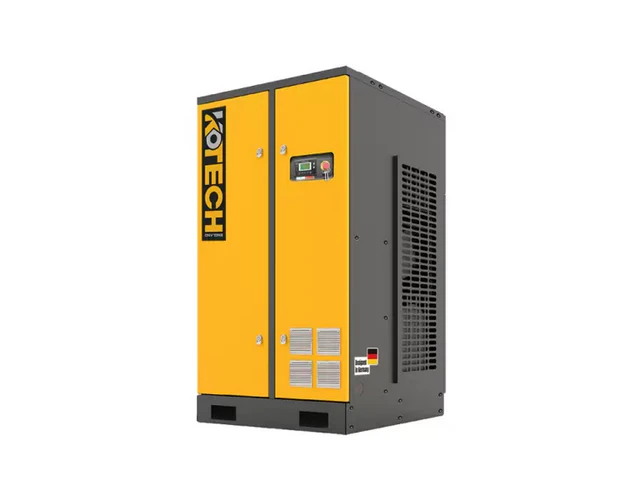
Mastering Explosion-Proof Air Compression Offshore: A Pro's Guide
The Unseen Dangers: Why Explosion-Proof is Non-Negotiable Offshore
Working on an offshore platform means operating in a constant dance with potential hazards. Hydrocarbons are everywhere, and the atmosphere can quickly become explosive. This isn’t theoretical; it’s a daily reality that demands absolute adherence to safety protocols and, crucially, the right equipment. When it comes to air compressors, “explosion-proof” isn’t a premium feature; it’s a fundamental requirement.
An ordinary air compressor, with its standard electrical components and hot surfaces, introduces a potential ignition source into a hazardous environment. On an offshore platform, where methane, propane, and other volatile organic compounds are routinely present, this is an unacceptable risk. Explosion-proof designs eliminate or contain these ignition sources, ensuring that even in the presence of an explosive gas-air mixture, the compressor itself will not trigger an ignition.
Market Dynamics & Regulatory Imperatives Driving Adoption
The drive for explosion-proof equipment isn’t just common sense; it’s a legal and ethical obligation. Regulations like the European ATEX directives (2014/34/EU) and the international IECEx schemes provide a clear framework for equipment intended for use in potentially explosive atmospheres. In North America, we’re looking at Class/Division/Group classifications under NFPA 70 (National Electrical Code).
These aren’t just bureaucratic hurdles; they are life-saving standards forged from decades of industrial accidents.
Furthermore, DNV’s 2022 ‘Offshore Reliability Data Handbook’ highlighted that hydrocarbon releases remain a primary cause of major accidents, with ignition sources often originating from electrical or mechanical equipment failures. This data underscores the direct link between equipment integrity, particularly in hazardous areas, and overall platform safety. This clearly shows that industry leaders are prioritizing safety through tangible investments.
Beyond Compliance: Operational Efficiency & Lifecycle Costs
While safety is paramount, explosion-proof air compressors also deliver significant operational advantages. These units are built to withstand extreme conditions – corrosive marine environments, constant vibrations, and wide temperature swings. This inherent robustness translates directly into higher reliability and longer service life, which are critical for offshore operations where downtime is incredibly costly.
Think about it: a standard compressor might fail prematurely in a harsh offshore setting, leading to costly repairs, replacement, and production losses. An explosion-proof unit, designed for such environments, minimizes these risks. This often leads to a lower Total Cost of Ownership (TCO) over the equipment’s lifespan, despite a higher initial capital expenditure. Our team often emphasizes this point to clients: a cheap compressor isn’t cheap if it shuts down your platform or, worse, causes an incident.
These compressors are often integrated into critical systems like instrument air, which controls valves and actuators, or starting air for generators and emergency systems. Their reliability directly impacts the platform’s ability to operate safely and efficiently.
Choosing the Right System: Critical Factors & Common Pitfalls
Selecting the appropriate explosion-proof air compressor for an offshore platform is a nuanced process. It’s not a one-size-fits-all situation.
Hazardous Area Classification: Zone 1 vs. Zone 2
- Zone 1: An explosive atmosphere is likely to occur in normal operation. This demands the highest level of protection.
- Zone 2: An explosive atmosphere is not likely to occur in normal operation but, if it does, will persist only for a short period. While less stringent than Zone 1, it still requires certified equipment.
Understanding the specific zone where the compressor will operate is the absolute first step. Misclassifying an area can lead to either overspending on unnecessary protection or, more dangerously, underspending on inadequate protection.
Gas Group and Temperature Class
Beyond the zone, you need to consider the specific gas or vapor present (Gas Group, e.g., IIA, IIB, IIC) and the autoignition temperature of that substance (Temperature Class, e.g., T1-T6). The compressor must be certified for the specific gas group and must not exceed the maximum surface temperature allowed by the temperature class.
Types of Explosion-Proof Systems
- Purge and Pressurization Systems (Type X, Y, Z): These introduce a protective gas (usually instrument air) into an enclosure to prevent the ingress of hazardous gases. Type X offers the highest protection.
- Flameproof Enclosures (‘d’): Electrical components are housed in an enclosure strong enough to contain an internal explosion and prevent transmission to the surrounding atmosphere.
- Increased Safety (‘e’): Focuses on preventing sparks, arcs, or hot spots in electrical equipment that could ignite an explosive atmosphere.
- Intrinsic Safety (‘i’): Limits electrical and thermal energy to a level too low to ignite an explosive mixture. Often used for instrumentation rather than large power equipment.
For large air compressors, purge and pressurization or flameproof enclosures are most common. However, for smaller control components, intrinsic safety might be more appropriate. A common pitfall is assuming one type of protection covers all scenarios. For example, a flameproof motor might be necessary, but the control panel could use a purge and pressurization system. It’s crucial to evaluate each component’s protection method.
This discussion, however, generally doesn’t apply to situations where the platform operates solely with non-hydrocarbon processes in an intrinsically safe environment, which is exceedingly rare in traditional oil and gas extraction. Only when no flammable gases are ever present, and cannot be introduced, would a standard compressor even be considered.
Installation & Maintenance: Best Practices for Longevity
Even the best explosion-proof compressor is only as good as its installation and maintenance. Incorrect wiring, improper sealing, or failure to follow manufacturer guidelines can compromise its explosion protection. This isn’t just about functionality; it’s about maintaining the integrity of the hazardous area certification.
- Certified Technicians: All installation and maintenance work must be performed by personnel certified in hazardous area equipment.
- Regular Inspections: Routine checks of seals, cables, enclosures, and purging systems are critical. Any breach could render the explosion protection ineffective.
- Documentation: Meticulous records of all inspections, maintenance, and repairs are essential for compliance and auditing.
- Spare Parts: Only use genuine, certified spare parts. Substituting with non-approved components immediately invalidates the explosion-proof certification.
Our experience suggests that a robust preventative maintenance schedule, tailored to the specific offshore environment, is the most effective way to ensure long-term reliability and compliance.
Emerging Technologies & Future Outlook
The industry isn’t standing still. We’re seeing advancements in smart sensors for predictive maintenance, integrated safety systems that can remotely monitor atmospheric conditions, and more energy-efficient compressor designs that still meet stringent explosion-proof requirements. The push towards digitalization and automation on offshore platforms means that future explosion-proof compressors will likely integrate more seamlessly into broader control networks, offering enhanced diagnostics and operational insights, all while maintaining the highest safety standards.
As the energy transition evolves, and we see more offshore wind or carbon capture projects, the demand for explosion-proof equipment will continue, albeit potentially for different gas groups or operational parameters. The core principle of preventing ignition in hazardous environments remains universal.