
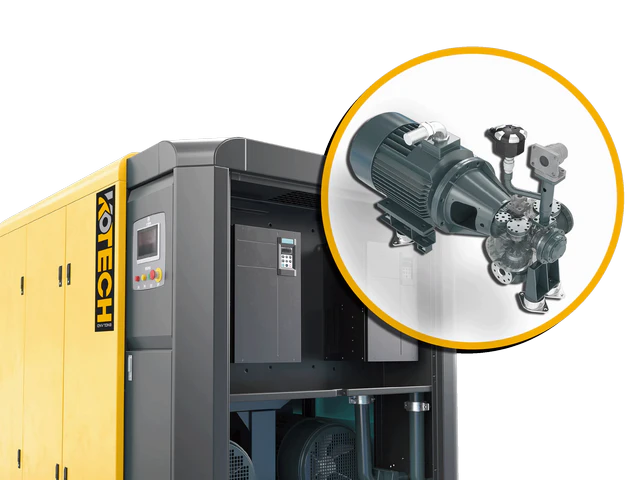
Choosing between portable and stationary air compressors for mining is a critical decision impacting uptime, energy consumption, and overall profitability. This expert guide, from someone with over a decade in the field, breaks down the operational imperatives, energy considerations, and advanced features essential for selecting robust, efficient compressed air solutions tailored to the harsh realities of any mine site. Get actionable insights to minimize downtime and maximize output.
Selecting the Right Air Compressor for Mining Operations
Key Takeaways
- Mining air compressors are either portable for flexibility or stationary for continuous, high-volume demand.
- VSD technology can save 25-35% on energy costs by matching air output to demand.
- Durable construction, advanced filtration, and remote monitoring are essential for reliability in harsh mine environments.
- Total Cost of Ownership (TCO), including energy and maintenance, outweighs initial purchase price.
- Accurately assess your air demand profile to avoid over-specifying equipment.
Related: Heavy-duty air compressors for mining · energy-efficient mining compressors · reliable compressed air solutions · surface mining equipment · underground mining air systems · remote site compressors · blast hole drilling compressors
Portable & Stationary Mining Air Compressors for All Operations
Selecting the right portable or stationary mining air compressor isn’t just about power; it’s a strategic decision directly impacting operational uptime, energy efficiency, and ultimately, your bottom line in the brutal mining environment. Getting this wrong means costly delays and inflated energy bills.
Key Insights:
- Strategic compressor selection directly reduces operational downtime and energy expenditure in mining.
- Modern variable speed drive (VSD) compressors can cut energy costs by up to 35% compared to fixed-speed units.
- On-site operational flexibility often dictates the choice between robust stationary setups and agile portable units.
- Advanced filtration and remote monitoring are no longer luxuries, but necessities for longevity in harsh mining conditions.
Understanding Your Operational Imperatives: Portable vs. Stationary
The choice between portable and stationary air compressors hinges entirely on your specific mine site’s needs and operational flow. Each offers distinct advantages and drawbacks that demand careful consideration.
Portable Mining Air Compressors: Agility Where You Need It
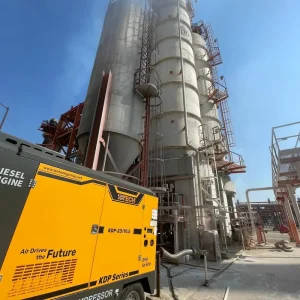
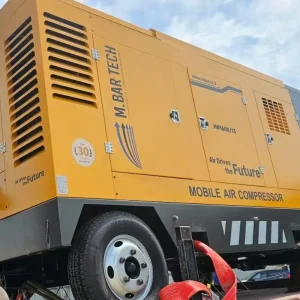
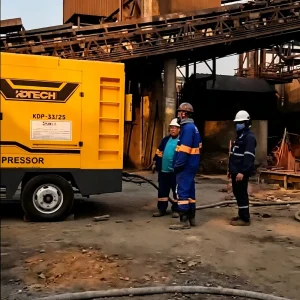
Portable units are the workhorses for applications requiring frequent relocation. Think exploration drilling, blast hole drilling in new sections, or temporary air supply during maintenance of primary systems. They offer unparalleled flexibility. These units typically come mounted on skids or trailers, designed for easy transport across rugged terrain. Their quick deployment minimizes setup time, making them invaluable for dynamic mining operations. Many are diesel-powered, providing independence from grid infrastructure, a crucial factor in remote mining locations.
However, portable compressors generally have higher fuel consumption per CFM compared to their stationary counterparts, and their noise output can be a significant concern in certain environments. I’ve seen operations overlook the noise factor only to face complaints and even regulatory fines later.
Stationary Mining Air Compressors: The Backbone of Consistent Demand
For continuous, high-volume air requirements at fixed processing plants, workshops, or large-scale underground ventilation systems, stationary compressors are the undisputed champions. These heavy-duty installations are designed for maximum efficiency and longevity, often integrated into a dedicated compressor room with sophisticated air treatment systems. They typically run on electric power, offering lower operating costs over time, especially with access to stable grid power or large-scale renewable energy sources.
The initial investment for a stationary setup, including foundations, piping, and electrical infrastructure, is significantly higher. But the long-term reliability and lower per-CFM operating cost often justify this expense for stable, long-term operations. Frankly, for any permanent installation requiring consistent air quality and pressure, stationary is the only sensible choice.
The Unseen Costs: Energy Efficiency & Downtime Mitigation
Beyond the sticker price, the true cost of an air compressor is dominated by its energy consumption and its potential to cause downtime. In mining, these factors can quickly erode profitability.
Optimizing Energy Consumption
Air compressors are notorious energy hogs. According to the U.S. Department of Energy (DOE), compressed air systems can account for up to 30% of a plant’s total electricity bill. This figure is often higher in energy-intensive sectors like mining. This is where modern technology shines. Variable Speed Drive (VSD) compressors, for instance, adjust motor speed to match air demand, significantly reducing energy waste during fluctuating loads. We’ve seen clients achieve energy savings of 25-35% simply by upgrading from fixed-speed to VSD units, as reported by industry analyses like those from the Compressed Air and Gas Institute (CAGI) in their 2023 efficiency guidelines. This isn’t just a marginal gain; it’s a game-changer for your operational budget.
Minimizing Downtime Risks
Every minute a compressor is down means lost production. The global mining equipment market is projected to reach over $280 billion by 2030, driven by demand for reliable, high-performance machinery, as indicated by reports from Grand View Research in 2023. This growth underscores the industry’s focus on operational continuity. Robust construction, high-quality components, and effective filtration systems are paramount. Consider units with advanced diagnostics and remote monitoring capabilities. These features allow for predictive maintenance, alerting operators to potential issues before they escalate into costly failures. Proactive intervention, based on real-time data, is far more cost-effective than reactive repairs after a breakdown.
Navigating the Harsh Realities: Durability and Maintenance in Mining
Mining environments are brutal. Dust, extreme temperatures, vibrations, and remote locations put immense stress on equipment. Your compressor needs to be built to withstand this.
Built for Extremes
Look for features specifically designed for heavy-duty applications: heavy-gauge steel enclosures, oversized coolers, robust air intake filters (multi-stage filtration is a must in dusty mines), and corrosion-resistant coatings. Engines and motors should be rated for continuous operation under high ambient temperatures. For underground mining, explosion-proof components and specialized exhaust treatment might be non-negotiable. This isn’t about luxury; it’s about survival.
Streamlining Maintenance in Remote Locations
Ease of maintenance is often overlooked until you’re trying to fix a complex issue 50 miles from the nearest paved road. Choose compressors with easily accessible service points, common parts, and clear diagnostic interfaces. Supplier support and parts availability are critical. A compressor might be cheaper upfront, but if parts take weeks to arrive at a remote mine site, the long-term cost of downtime will quickly eclipse any initial savings. I recall a project in Western Australia where a minor part failure on an obscure brand compressor led to a two-week shutdown simply due to lead times. It was a brutal lesson.
Beyond the Basics: Advanced Features & Future Trends
The mining industry is evolving, and air compressor technology is keeping pace.
Smart Systems and Connectivity
The advent of IIoT (Industrial Internet of Things) is transforming compressor management. Remote monitoring, predictive maintenance, and even autonomous operation are becoming more common. These systems provide invaluable data on performance, efficiency, and potential issues, allowing for optimized scheduling and reduced human intervention. Integration with broader mine management systems can offer a holistic view of operations, enhancing overall efficiency and safety.
Emissions and Noise Reduction
Environmental regulations are tightening globally. Modern compressors are designed with lower emissions and reduced noise levels. For diesel-powered portable units, Tier 4 Final engines are increasingly standard, offering cleaner operation. Electric stationary units inherently have zero direct emissions, making them a preferred choice where power infrastructure permits. Noise attenuation enclosures are also critical, especially for operations near populated areas or for improving worker conditions on site.
When Not to Over-Spec: A Counter-Example
While it’s tempting to buy the biggest, most feature-rich compressor, over-specifying can be a costly mistake. A high-capacity VSD unit, for example, designed for fluctuating, high-demand applications, offers significant energy savings *only* when its load profile matches its design. If your operation has a consistently low or steady demand, a simpler, fixed-speed unit might actually be more cost-effective. The VSD’s initial higher capital cost might not be recouped through energy savings if it’s constantly running at its lowest capacity, where its efficiency advantage diminishes. It’s crucial to accurately assess your compressed air demand profile before making a decision.
Practical Steps for Compressor Procurement
- Conduct a thorough air audit: Understand your current and projected CFM and PSI requirements, including peak loads and average demand.
- Evaluate the environment: Consider temperature extremes, dust levels, altitude, and proximity to power sources.
- Assess mobility needs: Determine if portability is essential or if a fixed installation is more suitable.
- Prioritize energy efficiency: Factor in potential energy savings from VSD technology and proper sizing.
- Investigate maintenance and support: Ensure readily available parts, service technicians, and strong supplier support.
- Consider total cost of ownership (TCO): Look beyond the purchase price to include energy, maintenance, and potential downtime costs over the equipment’s lifespan.
Expert Insights
In my experience, the biggest mistake companies make is viewing air compressors as a commodity. They're critical infrastructure. Investing in the right technology upfront, particularly VSDs and robust filtration, pays dividends in reduced energy bills and averted downtime that far exceed the initial capital outlay. It’s an operational imperative, not just a procurement decision.
Further Reading
- The Impact of Altitude on Mining Air Compressor Performance
- Mining Air Compressors for Drilling, Blasting & Site Work
- Compact Portable Diesel Air Compressors for Mining Equipment Power
- Reliable Oil & Gas Air Compressor Applications for Gas Fields
- Mining air compressors, portable mining compressors, stationary mining compressors, industrial air compressors, mine site compressed air – Common Mining Air
- Two-Stage Compressor for Powering Pneumatic Conveying Systems
- Mining Air Compressors for Construction, Mining & Exploration
- Long-Run Portable Diesel Compressors for 24/7 Mining Projects
About the Author

Related Reading: Oil & Gas Air Compressor Applications in Well Servicing Works
Related Applied Cases