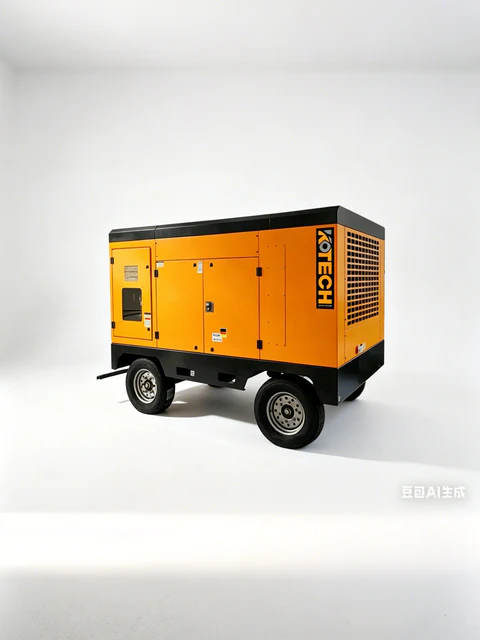
Understanding Air Compressor Duty Cycles for Mining Applications

Mismanaging air compressor duty cycles in mining leads to significant energy waste, premature equipment failure, and costly downtime. This guide, drawing on over a decade of firsthand experience, unpacks the nuances of duty cycle analysis, offering actionable strategies—from accurate demand profiling to leveraging VSD technology—to enhance operational efficiency, extend equipment lifespan, and drastically reduce total cost of ownership in demanding mine environments.

Optimizing Mining Compressor Performance Through Duty Cycle Mastery

Key Takeaways

  • Duty cycle mismanagement inflates mining operational costs by 20-30%.
  • Accurate demand profiling is critical for proper compressor sizing.
  • VSD compressors can yield 35-50% energy savings in variable demand scenarios.
  • Thermal cycling from poor duty cycle management causes premature equipment failure.
  • High-altitude and dusty conditions require careful derating and specialized duty cycle considerations.
  • A modular compressor fleet often outperforms a single large unit in mining.

Related: Industrial compressor load profiles · heavy-duty air compressor efficiency · mine site air supply management · compressor sizing for mining · VSD compressor benefits in mining · operational expenditure reduction · predictive maintenance for mining compressors · total cost of ownership in harsh environments.

In mining, your air compressors are the unsung workhorses, powering everything from drilling rigs to pneumatic tools and ventilation systems. Yet, a fundamental misunderstanding of their duty cycle often leads to colossal operational inefficiencies, premature equipment failure, and inflated energy costs. My twelve years in this industry have shown me time and again that getting duty cycle right isn’t just about picking a compressor; it’s about optimizing your entire air system for the harsh, intermittent demands of a mine site.

Key Insights:

  • Mismanaged duty cycles directly increase mining operational costs by 20-30% due to energy waste and accelerated wear.
  • Accurate demand profiling, not nameplate capacity, is the bedrock of proper compressor sizing for variable mine loads.
  • Variable Speed Drive (VSD) compressors are not a universal fix but can cut energy consumption by 35% or more in highly intermittent applications.
  • Thermal cycling, a direct result of improper duty cycle management, is a leading cause of premature component failure in mining compressors.
  • Implementing robust real-time monitoring and predictive maintenance is crucial for sustaining optimal duty cycle performance and preventing costly downtime.

The Criticality of Duty Cycles in Mining Operations

The term “duty cycle” in the context of air compressors refers to the percentage of time a compressor operates under load versus unloaded or idle. For mining operations, this isn’t a static number; it’s a dynamic variable influenced by shift changes, blast cycles, maintenance periods, and fluctuating production targets. Ignoring this variability is a direct route to financial drain and operational headaches. We’re talking about systems that are often oversized, constantly cycling on and off, or conversely, undersized and running continuously at peak, leading to drastically different wear patterns and energy consumption profiles. The goal is always to match the compressor’s output to the actual air demand as closely as possible, minimizing wasted energy and undue mechanical stress.

Unpacking the Data: Why Mismanagement Costs Big

The numbers don’t lie. Compressed air systems are notorious energy hogs, and in mining, the stakes are even higher. According to a U.S. Department of Energy 2021 report, compressed air accounts for roughly 10% of all industrial electricity consumption, with up to 50% of that energy potentially wasted due to leaks, inappropriate uses, and inefficient duty cycle management. For a large-scale mine, this translates into millions of dollars annually that could be saved. Furthermore, the cost of unscheduled downtime in mining can be staggering. A Mining Technology 2023 analysis highlighted that unplanned downtime can cost mining operations anywhere from $10,000 to $50,000 per hour, depending on the scale and type of mine. Premature compressor failure, often a direct consequence of thermal cycling from poor duty cycle handling, contributes significantly to these figures. When a critical compressor goes down, the ripple effect on production is immediate and severe.

I’ve seen firsthand how a mine that shifts from constant-speed, oversized units to VSD compressors, properly managed for their duty cycle, can slash energy bills. A Kaishan Compressor study from 2022 showed that VSD technology, when applied to variable demand profiles typical in mining, can reduce specific power consumption by 35-50% compared to fixed-speed alternatives. This isn’t just theoretical; it’s tangible savings that directly impact the bottom line.

Defining Duty Cycle: More Than Just On/Off

Understanding duty cycle goes beyond a simple percentage. It involves analyzing load/unload cycles, idle time, and the frequency of starts and stops. A compressor running at a 50% duty cycle might seem efficient, but if it’s achieving that by constantly loading and unloading every few minutes, the thermal stress on components like the motor, bearings, and air end is immense. This rapid heating and cooling, known as thermal cycling, accelerates wear and significantly shortens the lifespan of the equipment. Conversely, a compressor that is undersized for a continuous demand will run constantly at 100% load, potentially overheating and failing prematurely, especially in high-altitude or high-temperature mining environments where cooling efficiency is already compromised. Proper duty cycle management aims for fewer, longer load cycles rather than frequent short ones, even if the overall percentage remains the same.

When Conventional Wisdom Fails: The High-Altitude/Extreme Dust Conundrum

The standard duty cycle calculations often don’t fully account for the extreme conditions found in many mining operations. At high altitudes, the reduced atmospheric pressure means a compressor has to work harder to produce the same volume of free air delivery (FAD) at a given pressure. This increased workload can push a compressor beyond its design limits for continuous operation, even if its nominal duty cycle seems acceptable. Similarly, in environments with high dust and particulate matter, air filters can clog rapidly, increasing pressure drop and forcing the compressor to consume more power. A compressor rated for 100% duty cycle in a clean, sea-level factory might struggle to maintain a 70% effective duty cycle in a dusty, high-altitude mine without significant derating or increased maintenance. This is a boundary condition many overlook, leading to unexpected failures and higher operational costs. Honestly, relying solely on manufacturer’s ideal specs without considering your specific mine’s environmental factors is a recipe for disaster.

Actionable Strategies for Optimizing Compressor Duty Cycles

Accurate Demand Profiling

The first step is always to understand your actual air demand. This means performing a comprehensive air audit. Don’t guess; measure. Install data loggers to monitor pressure, flow, and power consumption over several shifts, capturing all operational phases from peak demand during drilling to minimal demand during shift changes or blasting. This data will reveal your true demand profile: peak flow, average flow, minimum flow, and, crucially, the variability and intermittency of your air needs. Without this, you’re just throwing money at equipment that might be entirely wrong for your application.

Leveraging VSD Technology

Variable Speed Drive (VSD) compressors excel in applications with fluctuating air demand, which is common in mining. By adjusting the motor speed, a VSD unit can precisely match its output to the required air flow, minimizing unloaded run time and eliminating wasteful blow-off. This significantly reduces energy consumption and thermal cycling. However, VSDs are not a magic bullet; they are less effective in applications with consistently high, stable demand. For those scenarios, a fixed-speed compressor might still be the more efficient choice, especially if it’s base-loaded in a multi-compressor system. The key is intelligent integration.

Implementing Robust Maintenance & Monitoring

Proactive maintenance is non-negotiable for mining compressors. Regular air filter changes, oil analysis, and leak detection are fundamental. Beyond that, embrace real-time monitoring systems. These systems provide continuous data on pressure, temperature, power consumption, and operating hours, allowing operators to spot inefficiencies, potential failures, and deviations from optimal duty cycle performance. Predictive maintenance strategies, leveraging this data, can schedule interventions before minor issues escalate into costly breakdowns, extending the lifespan of your heavy-duty mining compressors.

Right-Sizing Your Compressor Fleet

Often, a single large compressor is less efficient than a smaller, optimized fleet. Consider a modular approach: a combination of base-load fixed-speed units for consistent demand and VSD units to handle peaks and fluctuations. This allows for greater flexibility, redundancy, and energy efficiency. Proper sizing also means considering future expansion plans and potential changes in mining methods. Oversizing leads to excessive cycling and energy waste; undersizing leads to constant strain and potential production bottlenecks.

The Payoff: Enhanced Uptime and Reduced TCO

Mastering air compressor duty cycles in mining isn’t just about technical optimization; it’s a strategic move that directly impacts your operational expenditure (OpEx) and total cost of ownership (TCO). By preventing premature equipment wear, reducing energy bills, and minimizing unscheduled downtime, you’re not just saving money—you’re enhancing overall mine site productivity and ensuring a more reliable, sustainable operation. This holistic approach ensures your air compressors are assets, not liabilities, contributing positively to your bottom line for their entire service life.

Expert Insights

"After more than a decade in this field, I can confidently say that overlooking the nuances of air compressor duty cycles is one of the most common and expensive mistakes I see in mining operations. It's not just about buying a 'heavy-duty' machine; it's about deeply understanding how that machine interacts with your specific, often unpredictable, operational demands. The data consistently shows that a proactive, data-driven approach to duty cycle management pays dividends in energy savings, extended equipment life, and most importantly, uninterrupted production."

About the Author

· Senior Industrial Air Compressor Product & Operations Consultant @ Kotech

Arvin Hale is a seasoned engineer with over 12 years of hands-on experience in industrial air compressor product design, validation, and operational optimizatio…

Arvin Hale is a seasoned engineer with over 12 years of hands-on experience in industrial air compressor product design, validation, and operational optimization. His expertise spans screw compressors, portable industrial units, and oil-free systems, with a focus on balancing performance, energy efficiency, and reliability for mining, manufacturing, and construction applications. He combines deep technical knowledge with real-world operational insights, helping businesses design and deploy air systems that meet both performance and cost targets.

Frequently Asked Questions

What is the primary difference between a fixed-speed and a VSD compressor in terms of duty cycle management for mining?

A fixed-speed compressor runs at a constant motor speed, either fully loaded or completely unloaded, which can lead to inefficient cycling and wasted energy if air demand fluctuates significantly. A VSD (Variable Speed Drive) compressor adjusts its motor speed to precisely match the air demand, operating more efficiently across a wide range of duty cycles by reducing unloaded run time and energy consumption, making it ideal for the variable demands common in mining.

How often should a mining operation perform an air demand audit to optimize compressor duty cycles?

For most mining operations, an initial comprehensive air demand audit should be performed when commissioning new equipment or significantly changing operational patterns. Subsequently, regular audits (every 2-3 years) or continuous monitoring via data loggers and SCADA systems are recommended. This ensures that compressor sizing and control strategies remain aligned with evolving production demands and equipment performance over time.

Can a compressor be "over-cycled" and what are the consequences in a mining environment?

Yes, a compressor can be "over-cycled" if it frequently loads and unloads or starts and stops. In mining, this leads to severe thermal cycling, where components rapidly heat up and cool down. The consequences include accelerated wear on the motor, air end bearings, and contactors, significantly shortening the equipment's lifespan, increasing maintenance costs, and heightening the risk of unexpected breakdowns and costly production downtime.