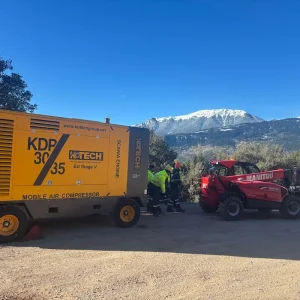

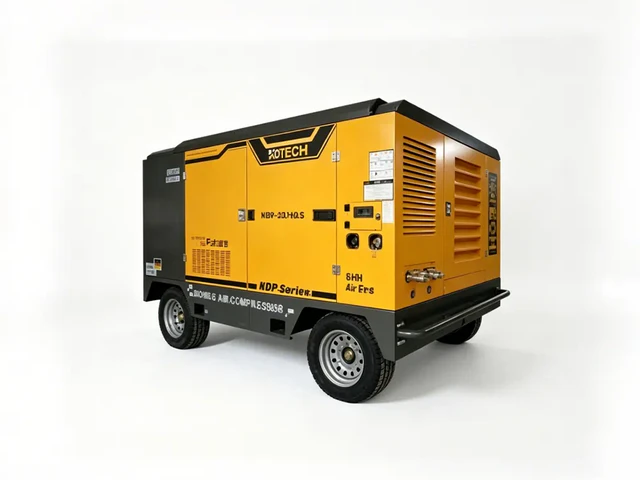
In the demanding world of oilfield temporary work zones, reliable skid-mounted air compressors aren't just equipment; they're the lifeblood of critical operations. My experience shows that choosing the right unit, prioritizing ruggedness and fuel efficiency, directly impacts uptime and profitability, especially when facing tight schedules and remote logistics.
Selecting and Deploying Skid-Mounted Air Compressors for Oil & Gas
Key Takeaways
- Skid-mounted compressors offer unmatched reliability and ruggedness for harsh oilfield conditions.
- Fuel efficiency and environmental compliance (e.g., Tier 4 Final) are crucial for operational cost reduction and regulatory adherence.
- Proper sizing, N+1 redundancy, and strong maintenance support minimize expensive downtime.
- Remote monitoring enhances predictive maintenance and operational visibility.
- Consider boundary conditions: trailer-mounted units might suit frequent road transport, but skid units excel on-site.
Related: Oilfield air utility · temporary site air solutions · remote well site compressors · fracking support air · drilling rig air power · industrial air systems for energy sector · robust air compression units · mobile air power for exploration.
Here are the Key Insights for optimizing your temporary oilfield air supply:
- Reliability is Non-Negotiable: Downtime from air compressor failure in a remote oilfield costs far more than the unit itself.
- Fuel Efficiency Drives ROI: With fluctuating fuel costs, an efficient compressor significantly reduces operational expenditure over a project’s lifecycle.
- Safety and Compliance are Paramount: Ensure units meet or exceed API and local environmental regulations for emissions and noise.
- Logistics Dictate Design: Skid-mounted designs simplify transport and rapid deployment to even the most inaccessible sites.
- Remote Monitoring is a Game Changer: Real-time data on performance and maintenance needs prevents costly surprises.
The Unseen Workhorse: Why Skid-Mounted Air Compressors Dominate Temporary Oilfield Operations
When you’re out on a temporary oilfield work zone – think drilling pads, fracking sites, or pipeline construction spreads – the last thing you need is your air supply failing. These aren’t just any job sites; they’re high-stakes environments where reliability is paramount. Skid-mounted air compressors have become the industry standard for a clear reason: they’re built to take a beating, deliver consistent performance, and get moved around without a fuss. We’re talking about units designed for instrument air, pneumatic tools, well testing, and even nitrogen generation. Honestly, I’ve seen too many projects grind to a halt because someone tried to cut corners with an inadequate air system.
The core challenge in temporary oilfield settings isn’t just generating compressed air; it’s doing so reliably, often 24/7, in extreme conditions. Dust, mud, vibration, and temperature swings are the norm. A conventional wheeled compressor might struggle with site terrain or require more complex tie-downs. Skid-mounted units, conversely, offer a stable, robust platform that integrates seamlessly into a temporary setup, whether it’s on a gravel pad or a modular processing unit.
Current Trends and Data Shaping Oilfield Air Compressor Demands
The oil and gas industry is constantly evolving, and so are the demands on support equipment like air compressors. We’re seeing a significant push towards greater efficiency and environmental compliance.
The global oil and gas upstream capital expenditure, while experiencing some volatility, is projected to see continued investment, reaching approximately $528 billion in 2024 (Rystad Energy, 2023). This sustained investment directly translates into demand for reliable temporary infrastructure, including robust air compression. Operators are looking for more than just raw power; they want smart power.
One major trend is the drive for reduced emissions. New environmental regulations, particularly in North America and Europe, are pushing for cleaner-burning engines. This means Tier 4 Final diesel engines are no longer a luxury but a necessity for most new purchases or long-term rentals. The market for industrial air compressors is also expanding, with a projected compound annual growth rate (CAGR) of over 4.5% from 2024 to 2030 (Grand View Research, 2024), partly fueled by the energy sector’s ongoing needs for efficient and compliant equipment.
Another critical factor is operational efficiency, directly linked to fuel consumption. With fuel prices remaining a significant operational cost, even marginal improvements in compressor efficiency add up. A recent industry report indicated that optimizing energy consumption in oilfield operations could lead to savings of 10-15% on fuel costs annually for some mid-sized operators (IHS Markit, 2023). This isn’t just about the compressor’s engine; it’s about its entire air-end design and control system.
The Mechanics of Robustness: Why Skid-Mounted Designs Excel
A skid-mounted compressor’s primary advantage lies in its construction. These units are built on heavy-duty steel frames, often with forklift pockets and lifting eyes, making them easy to move with standard oilfield equipment like telehandlers or cranes. This robust base protects internal components from shock and vibration during transport and operation.
Unlike trailer-mounted units, which are excellent for road transport but can be cumbersome on rough terrain, skid-mounted systems are designed for direct placement. They offer a lower center of gravity, enhancing stability, which is vital when operating near heavy machinery or during high winds. This design also allows for easier integration into larger modular systems or compact footprints on crowded well pads. Their static nature during operation reduces wear and tear associated with constant movement.
When Skid-Mounted Isn’t the Only Answer: Boundary Conditions
While skid-mounted air compressors are ideal for most temporary oilfield work zones, they aren’t a universal solution. For instance, if your operation requires frequent, rapid relocation *between* sites on public roads over long distances, a trailer-mounted portable air compressor might be more suitable due to its inherent mobility. However, once on site, the skid unit typically offers superior stability and protection.
Furthermore, for very small, intermittent air demands or specialized applications like extremely sensitive instrument air where an existing power grid is readily available, a smaller, perhaps electrically-driven stationary unit or even a micro-compressor might be more cost-effective. But for the heavy-duty, continuous air supply needs of a typical temporary oilfield setup, the skid-mounted solution remains king.
Practical Deployment: Getting the Most Out of Your Investment
Selecting the right skid-mounted air compressor involves more than just horsepower and CFM. Here’s what seasoned professionals consider:
Sizing for Demand and Redundancy
Understand your peak air demand, then add a buffer. Don’t undersize. It leads to continuous running at maximum capacity, increasing wear and tear, and reducing fuel efficiency. For critical applications, consider N+1 redundancy. Having a backup unit or sufficient capacity to handle a primary unit failure minimizes expensive downtime. Think about the specific applications: is it for powering jackhammers, operating pneumatic valves, or providing breathing air? Each has different air quality and pressure requirements.
Fuel Management and Efficiency
Look for compressors with advanced control systems that optimize engine speed to match air demand. Variable speed drive (VSD) electric compressors, if power is available, can offer significant energy savings. For diesel units, larger fuel tanks reduce the frequency of refueling, which is a logistical challenge in remote locations. Remote monitoring systems can track fuel levels and consumption, allowing for proactive resupply.
Maintenance and Serviceability
Ease of maintenance is a huge factor. Can filters be changed quickly? Are service points easily accessible? In harsh environments, quick turnaround for routine maintenance is crucial. Partnering with a supplier who offers robust field service and readily available parts is invaluable. A good maintenance contract can offset potential downtime costs.
Safety and Compliance
Ensure the unit meets all relevant API standards, OSHA requirements, and local environmental regulations. Spark arrestors, emergency shutdowns, and proper guarding are non-negotiable. Noise levels can also be a concern in certain areas, so consider acoustically attenuated enclosures if necessary.
Logistics and Site Integration
Before deployment, plan your lift points and placement. Ensure the ground is stable and level. Consider the proximity to other equipment for safety and operational flow. Having lifting eyes and forklift pockets that align with common oilfield equipment sizes simplifies deployment.
The Bottom Line: Investing in Uptime and Efficiency
Choosing a skid-mounted air compressor for your oilfield temporary work zones isn’t a trivial decision. It’s an investment in your project’s uptime, safety, and overall profitability. By focusing on robust design, fuel efficiency, comprehensive maintenance support, and regulatory compliance, you ensure that your air supply is a reliable asset, not a potential liability. The right unit keeps operations running smoothly, reduces unforeseen costs, and ultimately contributes to project success in some of the world’s most challenging environments.
Expert Insights
Based on my decades in the field, the biggest mistake I've witnessed isn't buying the wrong brand, it's underestimating the true cost of downtime. A slightly cheaper compressor that fails once a month will bleed you dry in lost production, logistical nightmares, and safety risks. Invest in quality, redundancy, and a solid maintenance plan for your air systems. The upfront cost difference pales in comparison to the operational headaches a reliable unit prevents.
Further Reading
- The Future of Mining Compressors: Digital & IoT Innovations
- Industrial Mining Air Compressors for Oil & Gas Mining
- Dust-Sealed Portable Diesel Compressors for Open-Pit Mining
- Air Compressor Solutions for Oil & Gas Refinery Maintenance
- Skid-Mounted Air Compressors, Oilfield Temporary Work Zones, Portable Air Compressors, Oil & Gas Air Supply, Heavy-Duty Air Compression – Mining Air Compres
- Industrial Mining Air Compressors | Low Maintenance & High Output
- Cold-Start Portable Diesel Air Compressors for Winter Mining
- High-Temperature Air Compressors for Desert Oilfield Operations
About the Author

Related Reading: Mining Air Compressors | Heavy-Duty Industrial Solutions