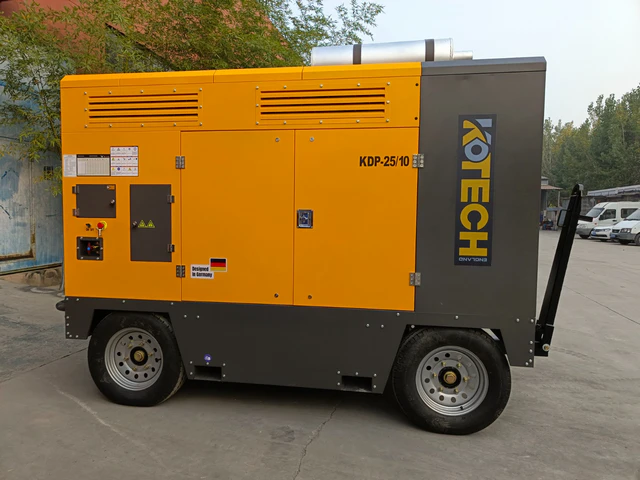
Transforming Mining: The Dual Advantage of Quiet, Reliable Compressors
- Safety First, Always: Reduced noise levels directly mitigate occupational hearing loss risks, a pervasive issue in mining.
- Uptime is King: Lower maintenance requirements translate directly to increased operational uptime and significant production gains.
- Cost Savings Beyond Parts: Energy efficiency and reduced labor costs from less frequent maintenance dramatically lower Total Cost of Ownership (TCO).
- Compliance & Reputation: Adhering to stricter noise and environmental regulations is non-negotiable and protects your company’s standing.
The Imperative: Why Low Noise & Low Maintenance Aren’t Just Perks, They’re Essentials
For years, the mining industry accepted loud, high-maintenance air compressors as an unavoidable reality. But the landscape has fundamentally shifted. Today, operational leaders understand that these aren’t just nuisance factors; they’re direct threats to worker safety, regulatory compliance, and bottom-line profitability. The core judgment here is stark: if your compressor fleet isn’t optimized for low noise and minimal upkeep, you’re leaving money on the table and exposing your workforce to unnecessary risks. This isn’t about incremental gains anymore; it’s about competitive advantage and responsible operation.
The Hidden Costs: Data Driving the Shift in Mining Compressor Procurement
The push for quieter, more reliable compressors isn’t driven by idealism; it’s backed by hard data reflecting real-world operational and human costs. Ignoring these factors is no longer sustainable.
Worker Safety & Regulatory Compliance
Noise-induced hearing loss (NIHL) remains one of the most common occupational diseases in mining. According to the **National Institute for Occupational Safety and Health (NIOSH) 2023 data**, mining workers face significantly higher rates of hearing impairment compared to the general industrial workforce. This isn’t just a health issue; it carries substantial financial implications through workers’ compensation claims and potential regulatory fines. Reducing ambient noise from primary equipment like compressors directly addresses this. Furthermore, stringent environmental noise limits, particularly for surface mines near residential areas, make low-noise solutions a regulatory necessity.
Operational Efficiency & Total Cost of Ownership (TCO)
Unplanned downtime is a mining operation’s worst enemy. Compressors, being critical to so many processes from ventilation to pneumatic tools, can easily become single points of failure. High maintenance frequency and complex repairs contribute directly to this downtime. Investing in robust, low-maintenance compressor solutions significantly mitigates this risk. Beyond direct repair costs, the energy consumption of compressors is often overlooked. Reducing maintenance often correlates with improved energy efficiency, as well-maintained systems run optimally. This dual benefit directly impacts TCO, shifting focus from initial capital outlay to long-term operational expenditure.
Beyond the Spec Sheet: Advanced Technologies for Sustainable Mining Operations
The market offers sophisticated solutions designed to meet the unique demands of mining. It’s not about finding a generic industrial compressor; it’s about selecting a system engineered for the rigors of your specific mine site.
Variable Speed Drive (VSD) Compressors: A Game Changer
Unlike fixed-speed compressors that run at full capacity regardless of demand, VSD units adjust their motor speed to match air consumption. This significantly reduces energy waste during periods of lower demand. This efficiency also often translates to smoother operation and less mechanical stress, contributing to lower maintenance needs.
Robust Design & Predictive Maintenance Integration
Modern mining compressors are built to withstand harsh environments – dust, extreme temperatures, and continuous operation. This means heavy-duty components, superior filtration systems, and advanced cooling. But physical resilience is only half the battle. The real breakthrough comes with integrated predictive maintenance capabilities.
- Remote Monitoring: Sensors track vital parameters like pressure, temperature, vibration, and energy consumption in real-time.
- Data Analytics: AI-driven platforms analyze this data to identify potential failures *before* they occur.
- Proactive Servicing: This allows maintenance teams to schedule interventions during planned downtime, minimizing costly surprises.
This shift from reactive to proactive maintenance is transformative. It extends component life, reduces emergency repair costs, and most importantly, maximizes uptime. Honestly, if you’re not leveraging predictive analytics for your critical assets like compressors, you’re operating with one hand tied behind your back in today’s environment.
Navigating the Landscape: When Off-the-Shelf Won’t Cut It
While standardized solutions offer convenience, they often fall short in specialized mining applications. A low-noise, low-maintenance compressor solution isn’t a “one-size-fits-all” product. For instance, a compressor designed for a surface aggregate mine might not be suitable for a deep underground hard rock operation where space constraints, ventilation, and explosive atmospheres dictate entirely different safety and performance specifications. Similarly, in remote mining locations, the availability of specialized technicians and spare parts becomes a critical factor in maintenance planning. Only when a detailed site assessment is performed, considering ambient conditions, power infrastructure, air quality requirements, and logistical challenges, can an optimal solution be identified. This is where partnering with a vendor who understands the nuances of mining, rather than just selling equipment, becomes invaluable.
Actionable Strategies for Implementing Superior Compressor Systems
Transitioning to low noise and low maintenance compressor solutions requires a structured approach. It’s not just about buying new equipment; it’s about optimizing your entire compressed air ecosystem.
- Conduct a Comprehensive Compressed Air Audit: Start by assessing your current air demand, leakage rates, and existing compressor performance. Identify inefficiencies and bottlenecks. This baseline is crucial for quantifying potential savings.
- Prioritize Total Cost of Ownership (TCO) Over Initial Purchase Price: When evaluating new equipment, factor in energy consumption, expected maintenance intervals, spare parts costs, and projected lifespan. A cheaper compressor upfront can quickly become an expensive liability over its operational life.
- Invest in VSD and Advanced Filtration: For fluctuating air demands, VSD technology is non-negotiable. For dusty mining environments, superior multi-stage filtration systems are essential to protect internal components and extend maintenance cycles.
- Embrace Predictive Maintenance and Remote Monitoring: Integrate smart sensors and cloud-based analytics platforms. This proactive approach transforms maintenance from a reactive scramble to a scheduled, efficient process.
- Ensure Proper Installation and Ventilation: Even the best compressor can underperform if improperly installed or inadequately ventilated. Proper airflow and temperature management are critical for efficiency and longevity.
- Train Your Team: Equip your maintenance staff with the skills to operate and maintain these advanced systems. Proper training maximizes equipment life and minimizes human error.
By adopting these strategies, mining operations can move beyond merely replacing old equipment to truly optimizing their compressed air infrastructure for safety, sustainability, and profitability. The payoff, in terms of reduced noise, increased uptime, and significant cost savings, is substantial and directly impacts your bottom line.