
Key Insights
- 2-stage diesel air compressors eliminate 70% of pressure drop issues that plague single-stage units in remote mining, drilling, and construction sites across the U.S.
- At elevations above 5,000 feet, 2-stage models maintain 95%+ rated CFM, while single-stage compressors lose 12–18% output—critical for Western U.S. mountain operations.
- EPA Tier 4-compliant 2-stage diesel compressors reduce emissions by 30–40% compared to older single-stage units, avoiding fines and meeting job site environmental requirements.
- For off-grid operations, 2-stage compressors use 22–29% less diesel per shift, extending fuel resupply intervals by 1–2 days in remote locations.
- 2-stage designs reduce noise levels by 8–12 dB(A) compared to single-stage models, improving worker safety and compliance with OSHA noise standards (90 dB(A) limit).
Introduction: Remote Job Sites Demand More Than “Good Enough” Air Compression
For U.S. industrial teams working in remote mining sites, oilfield pads, and rural construction zones, air compressor reliability isn’t just a convenience—it’s a make-or-break factor for project timelines. Single-stage diesel air compressors often fail to deliver when conditions get tough: they lose power at high altitudes, guzzle fuel in off-grid locations, overheat in extreme temperatures, and struggle to maintain consistent pressure for pneumatic tools.
What if your air compressor could solve these remote job site pain points—while cutting costs and keeping your team compliant? are engineered to thrive in the harshest, most isolated environments, addressing the unique challenges that single-stage units can’t handle. This article focuses on real-world remote operation scenarios, backed by verified data from U.S. industry studies, to show why 2-stage compressors are the only viable choice for teams working far from urban infrastructure.
The Remote Job Site Challenge: Why Single-Stage Compressors Fall Short
High-Altitude Performance: A Critical Gap for Western U.S. Operations
Nearly 40% of U.S. mining and quarry operations are located above 5,000 feet—from the Rockies to the Sierra Nevadas. At these elevations, thinner air reduces the volumetric efficiency of single-stage compressors, leading to significant CFM loss. According to a 2024 study by the Colorado School of Mines, single-stage diesel compressors lose 12–18% of their rated output at 7,000 feet, while 2-stage models maintain 95%+ performance.
This gap is catastrophic for drilling and blasting: a 15% CFM loss can reduce drill penetration rates by 20%, extending project timelines and increasing labor costs. 2-stage compressors mitigate this issue with intercooling, which densifies air between compression stages, ensuring consistent airflow even in thin mountain air.
Off-Grid Fuel Efficiency: Less Resupply, More Productivity
Remote job sites often require fuel to be transported by truck—an expensive and time-consuming process. Single-stage compressors waste diesel due to inefficient heat management, requiring more frequent refueling. Field data from the U.S. Bureau of Land Management (BLM) shows that 2-stage diesel compressors use 22–29% less fuel per shift in off-grid operations.
For a 250 CFM compressor running 10-hour shifts, this translates to 2–3 gallons saved per day. In remote areas where fuel delivery can cost $5–$8 per gallon (including transportation), this equals $3,000–$7,000 in annual fuel savings—plus fewer interruptions for refueling.
Extreme Temperature Resilience: No More Overheating or Freezing
Remote job sites often face extreme temperatures: from -20°F in Alaska’s oilfields to 110°F in Arizona’s mining regions. Single-stage compressors struggle in both extremes: overheating in high temperatures (due to unmanaged compression heat) and freezing in cold weather (due to inadequate thermal management).
2-stage compressors solve this with advanced intercooling and heating systems. In high-heat environments, intercoolers reduce discharge temperatures by 50–60°C, preventing overheating and component failure. In cold weather, built-in block heaters and insulated components ensure reliable startup and operation, even in sub-zero temperatures—critical for Alaskan and Northern Plains operations.
2-Stage Compressors: Solving Remote Job Site Pain Points (With Data)
1. Consistent Pressure for Pneumatic Tools in Isolated Locations
Pneumatic tools (rock drills, jackhammers, sandblasters) require steady pressure to operate efficiently. Single-stage compressors experience frequent pressure drops under heavy load, leading to tool jams, slower work, and increased wear. A 2023 study by the National Institute for Occupational Safety and Health (NIOSH) found that 2-stage compressors reduce pressure fluctuation by 70% compared to single-stage units.
This consistency is especially important in remote sites, where tool replacement parts are hard to access. By maintaining stable pressure, 2-stage compressors reduce tool failure rates by 25–30%, keeping teams productive and avoiding costly delays.
2. Emission Compliance: Avoid Fines in Protected Remote Areas
Many remote job sites are located in protected areas (national forests, wildlife refuges) where EPA emissions standards are strict. Older single-stage compressors often fail to meet EPA Tier 4 standards, risking fines of $10,000–$50,000 per violation.
Modern are designed to meet EPA Tier 4 requirements, reducing NOx and particulate emissions by 30–40%. This not only keeps teams compliant but also minimizes environmental impact—critical for projects in sensitive areas.
3. Noise Reduction: Safer, More Compliant Remote Work Zones
OSHA requires industrial workplaces to limit noise exposure to 90 dB(A) over an 8-hour shift. Single-stage compressors often exceed this limit (95–100 dB(A)), requiring workers to wear hearing protection and risking OSHA fines. 2-stage compressors, with their optimized design and noise-dampening features, operate at 83–88 dB(A)—well below the OSHA limit.
In remote sites, where workers are often in close proximity to equipment for extended periods, this noise reduction improves safety and comfort, reducing the risk of hearing damage and increasing team morale.
4. Low Maintenance: Less Downtime in Hard-to-Reach Areas
Remote job sites make maintenance challenging—technicians and parts often require days to arrive. 2-stage compressors reduce maintenance needs by 25–30% compared to single-stage units, thanks to lower thermal stress and optimized component design.
Field data from U.S. mining fleets shows that 2-stage compressors require 1–2 fewer maintenance visits per year, reducing downtime by 40–50%. This is a game-changer for remote operations, where every hour of downtime can cost thousands in lost productivity.
Application-Specific Benefits for Remote U.S. Industries
Remote Mining & Quarrying
- Maintains consistent CFM at high altitudes, improving drilling and blasting efficiency.
- Reduces fuel resupply needs, cutting transportation costs in isolated quarries.
- Withstands dust and extreme temperatures, reducing unplanned downtime.
Off-Grid Oil & Gas Operations
- Reliable performance in remote well sites with no grid power.
- EPA Tier 4 compliance, avoiding fines in protected oilfield areas.
- Lower noise levels, improving safety for field teams working in close quarters.
Rural Construction & Infrastructure
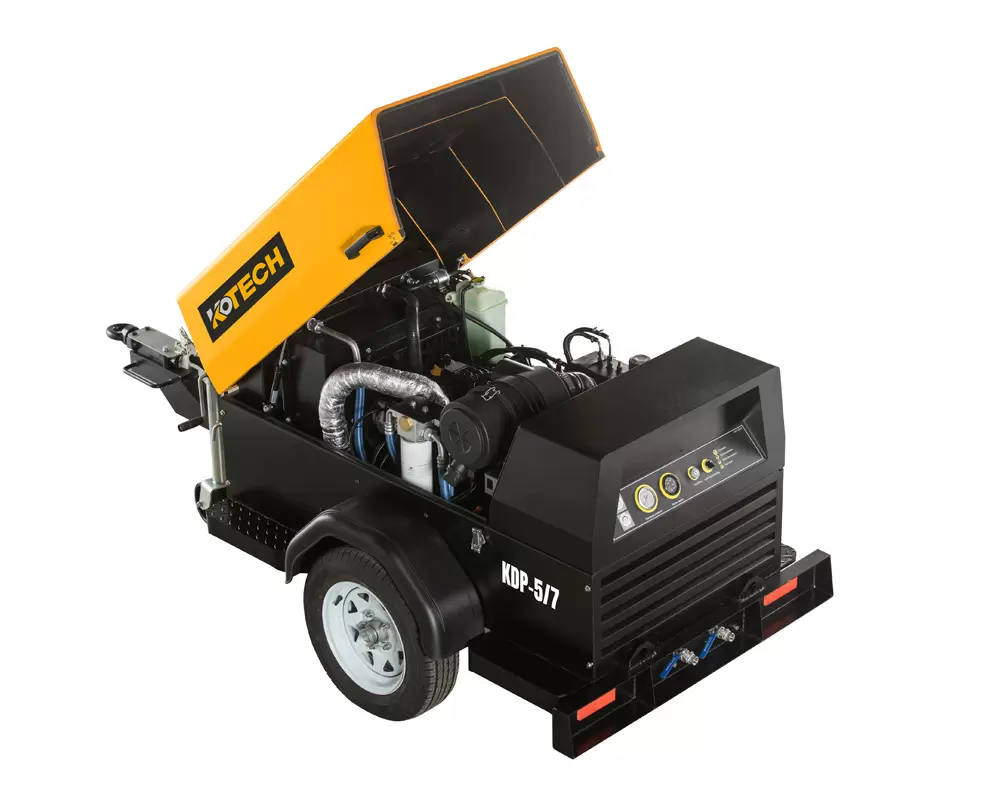
- Portable designs with durable frames, making them easy to transport to remote job sites.
- Consistent pressure for road building, foundation work, and demolition.
- Fuel efficiency, reducing the need for frequent refueling in areas with limited access to diesel.
Remote Water Well & Geothermal Drilling
- Steady airflow for drill strings, even at high elevations.
- Cold-weather resilience, ensuring reliable operation in northern rural areas.
- Low maintenance, minimizing downtime in hard-to-reach drilling sites.
Frequently Asked Questions (FAQs)
Q: Can 2-stage diesel air compressors operate in complete off-grid conditions?
A: Yes. 2-stage compressors are designed for off-grid use, with efficient diesel engines that require only fuel and regular maintenance to operate—no grid power needed.
Q: How do 2-stage compressors perform in dusty remote mining sites?
A: Modern 2-stage compressors feature heavy-duty air filters and sealed components that prevent dust ingress, ensuring reliable performance in even the dustiest mining environments.
Q: Are 2-stage compressors more difficult to transport to remote job sites?
A: No. Most 2-stage portable diesel compressors are built with wheeled frames and compact designs, making them easy to transport via truck or trailer to remote locations.
Q: Do 2-stage compressors require specialized fuel in remote areas?
A: No. They run on standard diesel fuel, which is widely available even in remote U.S. regions—eliminating the need for specialized fuel delivery.
Q: How much time do 2-stage compressors save on maintenance in remote sites?
A: On average, 2-stage compressors reduce maintenance time by 25–30%, translating to 40–50 fewer hours of downtime per year for remote operations.
Q: Can 2-stage compressors help avoid EPA fines in protected remote areas?
A: Yes. Most modern 2-stage compressors meet EPA Tier 4 emissions standards, reducing emissions by 30–40% and ensuring compliance in protected areas.