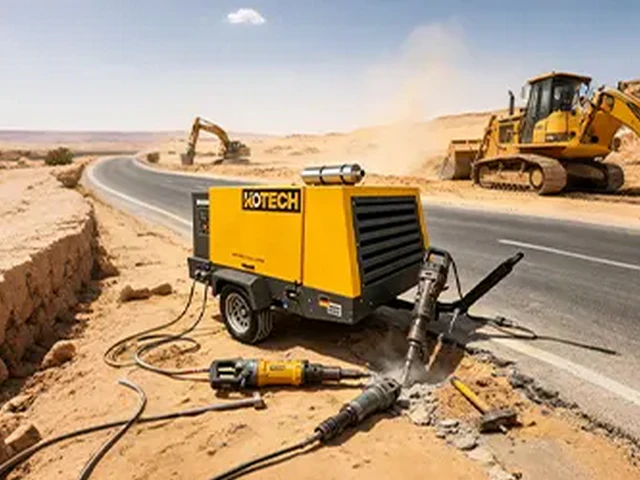
Selecting Robust Tow-Behind Diesel Air Compressors for Harsh Mining Environments
When you’re out in the field, miles from the nearest service station or power grid, your equipment isn’t just a tool—it’s your lifeline. For mining and exploration, specifically, the humble tow-behind diesel air compressor is often the unsung hero, powering everything from drilling rigs and pneumatic tools to vital site infrastructure. Choosing the right one isn’t just about horsepower; it’s about ensuring uninterrupted operations and, frankly, keeping your crew safe.
Here are the key insights you need to consider right upfront:
- Reliability is Non-Negotiable: In remote mining, uptime directly impacts project timelines and profitability.
- Fuel Efficiency Matters More Than Ever: Transporting diesel to isolated sites is costly; every gallon saved adds up significantly.
- Durability for Extreme Conditions: Units must withstand dust, vibration, temperature swings, and rough terrain without constant breakdowns.
- Maintenance Simplicity: Field maintenance needs to be straightforward, requiring common tools and readily available parts.
- Right-Sizing for the Job: Overspecifying wastes capital and fuel; underspecifying leads to productivity losses.
Why the Right Portable Air Compressor is Non-Negotiable in Mining
In the demanding world of mining and exploration, a robust and reliable air compressor isn’t a luxury; it’s an absolute necessity. From powering rock drills for core sampling and blasting operations to running pneumatic tools for equipment maintenance and site preparation, air power is foundational. Without consistent, high-pressure air, your entire operation can grind to a halt, leading to costly delays and missed targets.
The market for mining equipment continues its upward trajectory. This growth underscores the continuous need for reliable ancillary equipment like portable air compressors that can keep pace with expanded operations and more sophisticated drilling techniques.
The Evolving Landscape: Market Trends & Operational Imperatives
Mining and exploration are constantly pushing boundaries—geographically and technologically. This means the demands on supporting equipment like portable air compressors are also evolving. We’re seeing a clear trend towards more fuel-efficient engines, smarter control systems, and enhanced telemetry for remote monitoring. This isn’t just about being “green”; it’s about operational economics. Fuel costs are a massive line item for remote sites, and reducing consumption directly impacts profitability.
A Deloitte report in 2023 highlighted that operational efficiency and cost reduction remain top priorities for mining executives globally. This translates directly to the need for compressors that offer superior fuel economy without compromising power output. Furthermore, the increasing adoption of automation and digitalization in mining, as noted by Statista in 2024, means that equipment with integrated diagnostics and IoT capabilities is becoming more attractive, allowing for predictive maintenance and minimizing unexpected downtime—a critical factor when you’re thousands of miles from the nearest parts depot.
Key Considerations: Power, Durability, and Maintenance in the Field
Selecting a tow-behind diesel air compressor involves a deep dive into several critical areas.
Power Output (CFM & PSI)
The core function of any compressor is to deliver air, measured in Cubic Feet per Minute (CFM) and pounds per square inch (PSI). Your required CFM and PSI will depend entirely on the tools and equipment you’re running. Are you powering heavy-duty rock drills for production blasting, or smaller pneumatic tools for exploration sampling? Under-sizing means tools won’t operate at peak efficiency, leading to slower work. Oversizing, conversely, means higher upfront costs and unnecessary fuel burn.
Engine & Fuel Efficiency
This is where significant long-term savings or costs can be realized. Modern diesel engines are far more fuel-efficient and cleaner-burning than older models. Look for Tier 4 Final compliant engines, which meet stringent emissions standards and often come with advanced engine management systems that optimize fuel consumption. Consider features like automatic idle control, which reduces engine speed when air demand is low, and variable speed drives (VSD) that match engine output precisely to air demand. Honestly, what often gets missed is the ripple effect of poor fuel efficiency; it’s not just the cost of diesel, but the logistics of getting that diesel to your remote site, which can sometimes double the effective cost per gallon.
Robustness & Durability
Mining and exploration environments are brutal. Dust, extreme temperatures, constant vibration, and rough transport are the norm. Your compressor needs to be built like a tank. Look for:
- Heavy-gauge steel enclosures with robust powder coating.
- Heavy-duty axles and suspension designed for off-road towing.
- Integrated cooling systems designed for high ambient temperatures.
- Sealed electrical components and heavy-duty filtration systems to combat dust ingress.
- Skid-mounted options for stationary applications or areas where towing isn’t feasible.
Ease of Maintenance & Serviceability
When a compressor breaks down in the middle of nowhere, you need to fix it fast. Prioritize units with:
- Easy access to filters (air, oil, fuel), fluid levels, and battery.
- Common, readily available parts. Proprietary components can cause serious delays.
- Clear, intuitive diagnostic displays.
- Long service intervals to minimize downtime.
When a Tow-Behind Might Not Be Your Best Bet
While tow-behind diesel air compressors are incredibly versatile, they aren’t a universal solution. There are specific scenarios where they might not be the optimal choice. For instance, if your operation is in a very confined underground mine where diesel fumes are strictly regulated, or if you have consistent access to a robust electrical grid, an electric-powered compressor might be preferable. Similarly, for extremely short-duration, intermittent tasks that require minimal air volume, a smaller, more portable gasoline-powered unit could be more cost-effective. We’ve certainly seen clients over-invest in a large diesel unit for a job that only needed it for a few hours a month. It’s all about matching the tool to the specific application.
Making the Call: A Practical Selection Guide
Navigating the options for heavy-duty portable air compressors can feel overwhelming, but a structured approach simplifies the process.
Assess Your Specific Needs
Start by detailing every single air-powered tool and piece of equipment you’ll be using. Calculate the peak CFM and PSI required. Factor in future growth or changes in your operational scope. Consider the duty cycle—will the compressor run continuously for shifts, or intermittently?
Evaluate Environmental Factors
Where will the compressor operate? Extreme heat or cold? High altitude? Dusty desert or humid jungle? These factors dictate cooling system requirements, engine specifications, and overall build quality. A unit designed for temperate climates will quickly fail in a high-altitude, dusty exploration site.
Consider Total Cost of Ownership (TCO)
Beyond the initial purchase price, TCO includes fuel consumption, maintenance costs, spare parts availability, and potential downtime. A cheaper unit upfront can quickly become an expensive liability if it’s constantly breaking down or guzzling fuel. Look at warranties and manufacturer support networks, especially if you’re operating in truly remote regions.
Prioritize Safety Features
Modern tow-behind compressors come with various safety features, including emergency stop buttons, automatic shutdowns for low oil pressure or high temperatures, and anti-theft measures. These aren’t just good to have; they’re essential for protecting your investment and, more importantly, your personnel.
Don’t Overlook Towing Capabilities
Ensure the unit’s weight and dimensions are compatible with your existing tow vehicles and that it meets local transportation regulations. The chassis and hitch need to be robust enough for the terrain you’ll be traversing.
Ultimately, choosing the right tow-behind diesel air compressor for mining and exploration is a strategic decision that impacts productivity, safety, and your bottom line. Take the time to understand your specific requirements, evaluate the market carefully, and don’t hesitate to lean on experienced suppliers for their insights.