
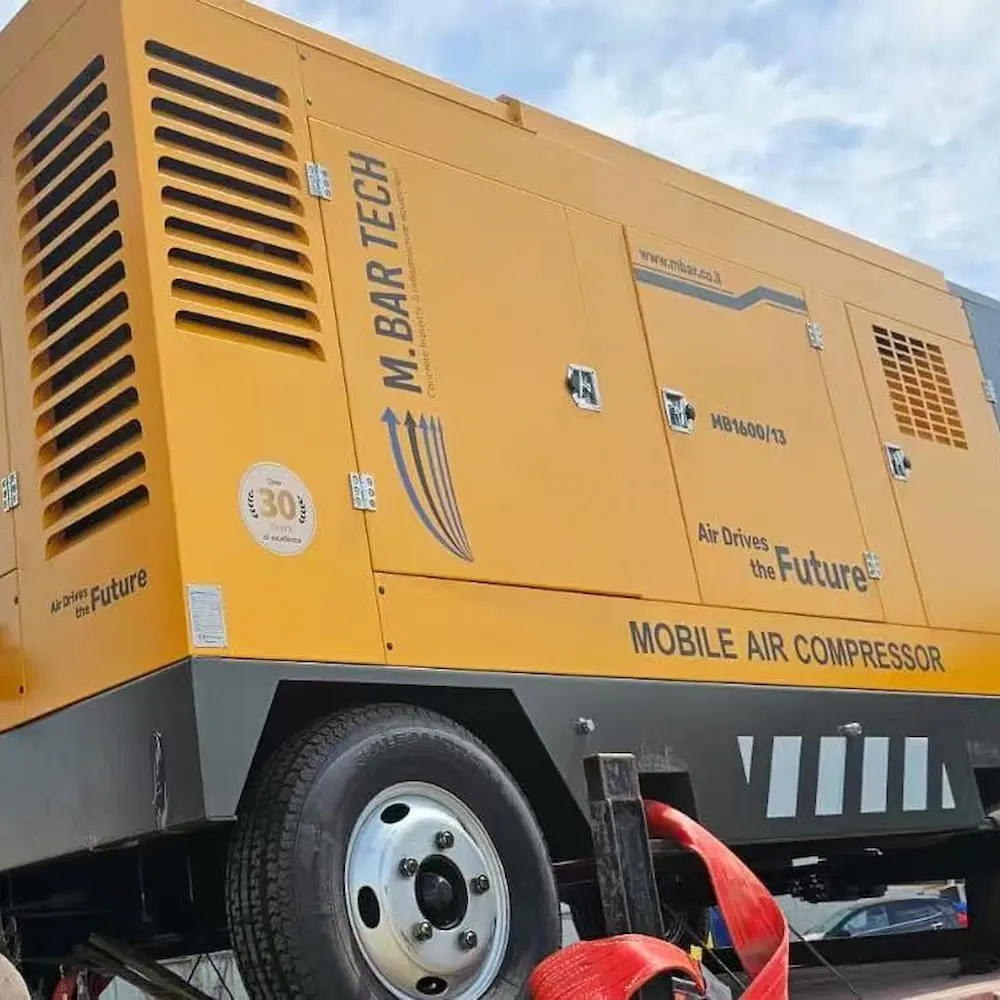
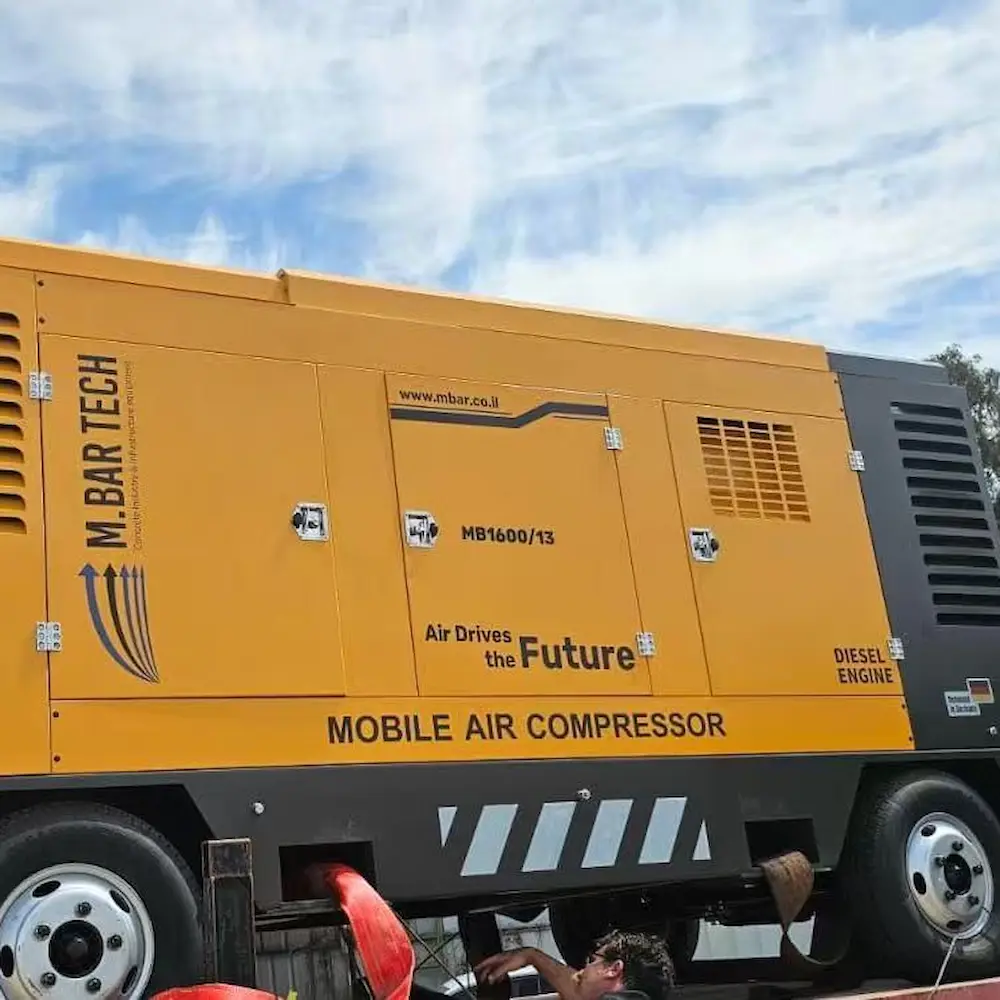
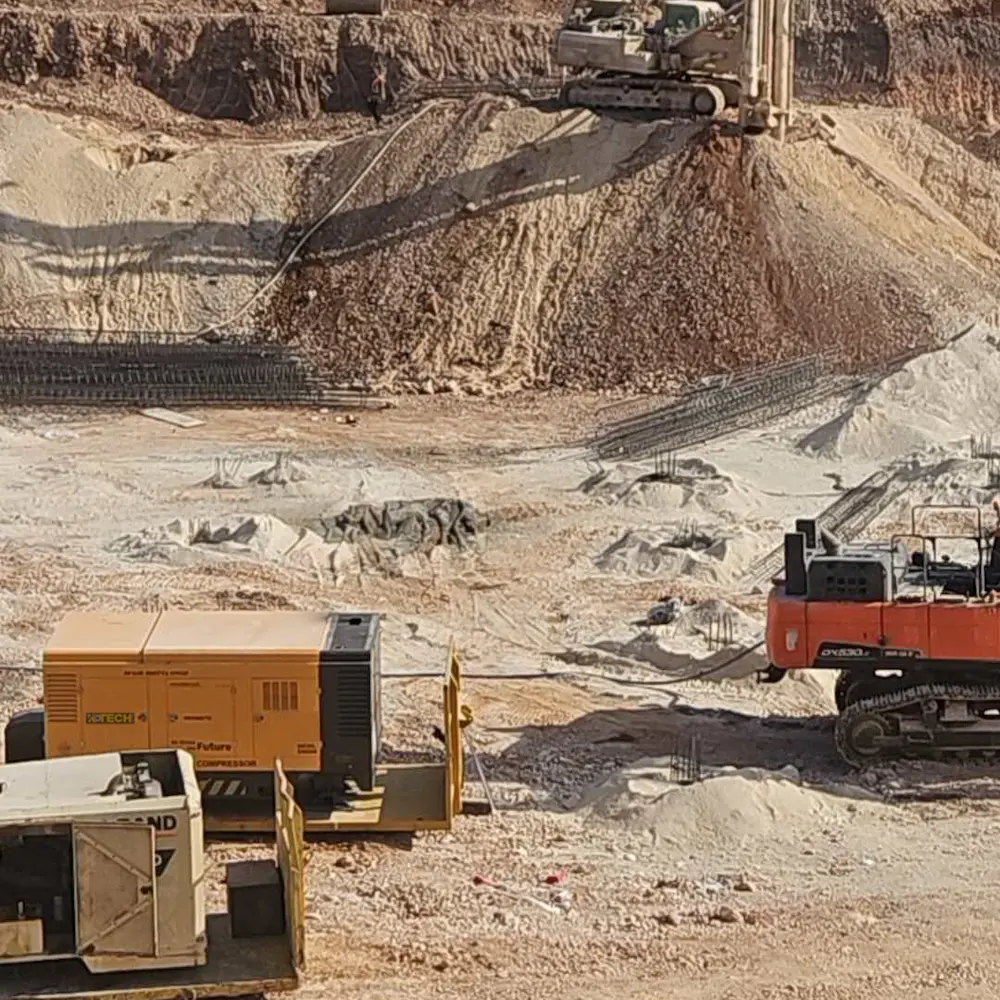
Kotech KDP-45/13 with GHH Airend & Cummins Engine Supports Drilling Operations in Israel’s Extreme 55°C Heat
The Kotech KDP-45/13 diesel portable rotary screw air compressor was deployed in Israel's Negev Desert and Dead Sea Rift region for a 120-day geothermal and deep-water drilling project. Operating in ambient temperatures up to 53°C, the unit delivered 45 m³/min at 13 bar with zero thermal shutdowns. The high-ambient cooling package with 30% surplus capacity, cyclone pre-cleaner for silica sand protection, and GHH two-stage airend enabled 97.8% uptime, 18% penetration rate improvement, and projected 8,000+ hour airend overhaul intervals—2.6 times longer than the client's previous fleet.
Get a QuoteCustomer Pain Points
Drilling in the Negev Desert isn't just hot—it's punishing. Summer daytime temperatures routinely hit 50–55°C, and the dry, dust-laden air carries fine silica sand that finds its way into every gap, every seal, every moving part. The client, a major Israeli drilling contractor that had been operating in the region for over a decade, had reached a breaking point.
Their existing compressor fleet—mostly standard European and Asian units—simply couldn't handle the environment. Thermal shutdowns were a daily occurrence by 1:00 PM. The machines would run fine in the early morning, but as the desert heated up, oil temperatures would spike past the safety cutoff, and the compressors would shut themselves down to prevent catastrophic failure. The drilling crews had gotten used to taking a two-hour "siesta break" in the middle of every shift—not because they wanted to, but because the equipment forced them to.
One unit's oil cooler literally burst at 52°C, spraying 40 liters of hot oil across the desert floor. The client's maintenance logs showed six major cooler failures in the previous year alone.
Beyond heat, the abrasive sand was chewing through airend components at an alarming rate. Standard rotary screw airends that should have lasted 8,000 hours were being rebuilt at barely 3,000 hours—the bearings would wear prematurely, rotor clearances would open up, and performance would drop off long before the scheduled maintenance interval. The compressor would still run, but pressure would sag, airflow would diminish, and the DTH hammers would lose impact energy. The drilling crews could feel it in the penetration rate—slow, frustrating, expensive.
The final straw came when the client's main competitor won a bid for a large geothermal exploration contract simply because they had newer, more reliable equipment. The client's owner put it bluntly: "We are losing work because our compressors can't keep up with the heat. That stops now."
Solutions
Kotech deployed the KDP-45/13 diesel portable rotary screw air compressor, configured specifically for extreme desert conditions. The unit delivers 45 m³/min at 13 bar(1,600 cfm at 188 psi)—more than enough volume and pressure to drive large-diameter DTH hammers and keep boreholes clear in the fractured limestone and silica-heavy formations typical of the Negev.
**The thermal management package** was the first line of defense. Kotech's engineering team fitted an oversized, high-ambient radiator system with a large-diameter low-speed fan—specifically chosen to move massive volumes of air without creating excessive noise. The cooler assembly uses separate, non-welded cores for engine coolant and compressor oil, a detail that prevents the thermal stress fractures that had ruined six of the client's previous units in the same heat. The cooling system offers roughly 30% surplus capacity above standard-spec compressors—meaning it can reject heat effectively even when the mercury hits 55°C. During the design review, the lead engineer told the client: "We'd rather over-cool it by 30% than have you call us at 3 PM saying it shut down. You will not lose production to heat with this unit."
For dust protection**, the KDP-45/13 features a multi-stage cyclone pre-cleaner that removes up to 90% of airborne sand and silica before air reaches the primary filter element. The pre-cleaner is paired with a heavy-duty nanofiber main filter that catches the remaining fines. In the Negev's dust storms—which can blow for days at a time—this two-barrier approach has proven essential. The cyclone discharges captured debris through a simple, tool-free bottom cap that the operator empties daily, no special tools required.
The power train** combines a heavy-duty Cummins diesel engine** (rated at 410 kW) with an original GHH two-stage screw airend . The GHH unit is built with oversized SKF bearings and precision-machined rotors, engineered for continuous 100% duty cycle operation even when ambient temperatures push the envelope. The two-stage compression design reduces the load on each stage, which lowers internal temperatures and extends component life—exactly what's needed when the compressor runs 10-12 hours a day in 50°C-plus heat.
Both engine and airend are accessible from a single side, a practical design that keeps maintenance times short in the field. The client's maintenance supervisor later noted: "When it's 50 degrees outside, you don't want to walk around the machine three times to do a basic service. One side access—smart."
Implementation Steps
- - Site assessment of drilling depth, hole diameter, and expected ambient temperature range in the Negev.
- - Custom high-ambient cooling package integration with oversized radiator and high-volume fan.
- - Installation of heavy-duty multi-stage cyclone pre-cleaner and nanofiber final filters.
- - Equipment delivery to Negev drilling site and chassis inspection for desert transport.
- - Integration with client's DTH drilling rigs (hole diameters 150–250mm, depths up to 350m).
- - On-site commissioning under 50°C test conditions—including a deliberate full-load run at midday.
- - Real-time performance monitoring and drilling parameter optimization over the first two weeks.
- - Local operator training on maintenance, filter cleaning, and thermal management procedures.
Customer results
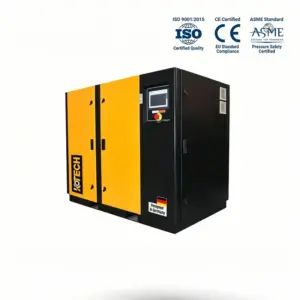
Products Used in This Case
FAQ (Frequently Asked Questions)
What makes the KDP-45/13 different from standard compressors in 55°C heat?
The difference is the cooling system. Standard compressors are designed for 35–40°C ambient temperatures. The KDP-45/13's high-ambient package includes a physically larger radiator, a high-volume low-speed fan, and separate non-welded oil and coolant cores. The unit has roughly 30% surplus cooling capacity, meaning it can reject heat effectively even when temperatures exceed the design point. In the Negev project, the compressor ran at full load through 53°C afternoons without derating or shutting down—something the client's old machines couldn't do.
How does the GHH airend perform in abrasive desert dust?
The GHH two-stage airend is built for continuous heavy-duty use. It uses oversized SKF bearings and precision-ground stainless steel rotors, which resist wear better than standard cast-iron designs. The two-stage configuration also helps: by splitting the compression into two stages, each stage runs cooler and with less pressure differential, which reduces internal stress and extends life. The cyclone pre-cleaner removes 90% of sand before it reaches the main filter, so the airend sees much cleaner air than standard units. In the Negev project, the airend showed no measurable wear after 2,880 hours of operation.
What size drilling rigs and hole diameters can this compressor support?
The KDP-45/13 delivers 45 m³/min at 13 bar, enough volume to support large-diameter DTH hammers for boreholes ranging from 150mm to 250mm, at depths up to 350 meters. In the Negev and Dead Sea projects, the unit ran DTH rigs for both geothermal exploration (200–300mm holes) and water well drilling (150–200mm holes) without any performance issues. The high airflow also makes it suitable for deep holes where cuttings clearance becomes a challenge.
How does the compressor protect itself against sand ingress?
The KDP-45/13 uses a two-stage filtration strategy. First, a cyclone pre-cleaner spins incoming air to throw heavier sand and dust particles out of the airstream—this removes about 90% of particulates. Second, a heavy-duty nanofiber primary filter captures the remaining fines. The compressor enclosure is also designed to maintain positive internal pressure, which prevents dust from being drawn in through engine compartment gaps. During the Negev sandstorm, this system kept the compressor oil clean while standard machines were ingesting enough sand to damage their airends.
What fuel consumption can be expected in continuous desert drilling?
Fuel consumption varies with load, but the KDP-45/13 is optimized for steady-state drilling. In the Negev project, the unit consumed approximately 8–10% less fuel than the client's previous compressors for the same drilling output, primarily because the smart capacity control system reduces engine RPM when the drill stops for rod changes. The client calculated a 12% reduction in annual fuel cost based on the 120-day trial.